Guides · · 8 min read
How to Choose Durable Gymwear: 2026 Buyer's Guide
Learn how to choose durable gymwear that survives intense training and repeat washes. Discover fabric, stitching and care tips to get more wear from every.

Table of Contents
- What Makes Gymwear Durable: The Four Manufacturing Indicators
- The Best Fabric for Gym Clothes: Matching Material to Workout Intensity
- Signs of High Quality Gym Clothes You Can Check Before You Buy
- The Wash-Test Protocol: How to Care for Activewear So It Lasts
- Fit, Body Type and Range of Motion: Why Durable Gymwear Must Move With You
- Cost-Per-Wear and Sustainable Durability: The Long-Term Value Test
- Frequently Asked Questions
Last Updated: September 30, 2026
What Makes Gymwear Durable: The Four Manufacturing Indicators
Durable gymwear is clothing engineered to survive repeated high-intensity use without losing shape, colour, or structural integrity. At Quiet Unity, we judge that durability through four manufacturing indicators: fabric weight, fibre recovery, stitching quality, and abrasion resistance. Get these right and a garment lasts years, not months.
Most shoppers assess gymwear by feel alone. That's a mistake, the indicators that predict longevity are measurable before you spend anything.
The four indicators work together: a heavy fabric with weak seams fails at the seams, a strong seam on flimsy fabric tears the cloth, fibre recovery holds shape after stretching, and abrasion resistance determines how long the surface survives friction from benches, bars, and washing.
Fabric Weight (GSM) and Fibre Recovery
Fabric weight is measured in grams per square metre (GSM), and it's the fastest way to compare two garments. Lightweight activewear typically sits around 150-180 GSM. Mid-weight training tops run 180-220 GSM. Heavy cotton pieces, the kind built for both training and daily wear, start around 220 GSM and climb higher.
Fibre recovery describes how well a fabric returns to shape after stretching.
Stitching, Seams and Abrasion Resistance
Reinforced seams and flatlock stitching separate durable gymwear from disposable gymwear. Flatlock stitching lies flat against the skin, reducing chafing and distributing stress across the seam rather than at puncture points.
The Best Fabric for Gym Clothes: Matching Material to Workout Intensity
| Fabric | Typical Blend | Best For | Durability Strength | Durability Weakness |
|---|---|---|---|---|
| Polyester | 100% or 88/12 with elastane | High-impact cardio, HIIT | Abrasion-resistant, holds colour, quick-dry | Holds odour without anti-microbial finish; can pill at friction points |
| Nylon | 80/20 with elastane | Swimming, outdoor training, compression | Highest abrasion resistance of the synthetics, good UV stability | Lower breathability; degrades faster than polyester under chlorine |
| Elastane blends | 5-20% elastane with polyester or nylon | Yoga, mobility work, compression | Four-way stretch, shape recovery | Heat-sensitive, tumble drying accelerates fibre breakage |
| Heavy cotton | 100% or cotton/poly blend | Strength training, daily wear | Breathability, structure, holds shape through hundreds of washes | Slower to dry; can shrink if washed hot |
| Merino wool | 100% or blended with nylon | Low-impact training, travel, base layers | Natural odour resistance, temperature regulation | Lower abrasion resistance; requires careful washing |
The mistake is buying one fabric for everything. Match material to workout intensity and friction environment, and you'll replace less.
Signs of High Quality Gym Clothes You Can Check Before You Buy
The signs of high quality gym clothes are visible before purchase: dense fabric, flat seams, reinforced stress points, and substantial weight in hand. Run this checklist before you commit.
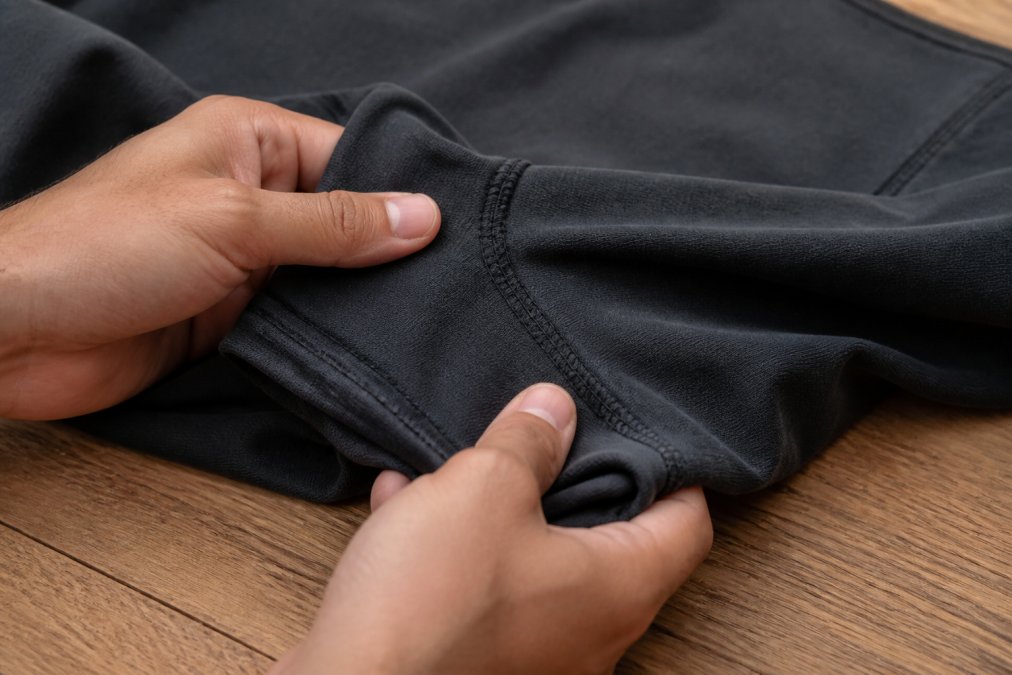
- Fabric feels dense, not thin or see-through when held to light
- Seams are flatlock stitched, not raised or bulky
- Hems are double-stitched
- Stress points at pockets and seam junctions are bar-tacked
- Care label lists a GSM or fabric weight
- Stretch fabric snaps back when released, showing fibre recovery
- No loose threads or skipped stitches along any seam
The Wash-Test Protocol: How to Care for Activewear So It Lasts
How to care for activewear comes down to three rules: wash cold, skip the dryer, and never use fabric softener. Heat and softener residue are the fastest ways to destroy technical fabrics and natural fibres alike.
- Turn garments inside out before washing to protect the outer surface from abrasion
- Use cold water, ideally 30°C or lower
- Choose a gentle cycle with a low spin speed
- Skip fabric softener entirely; it coats fibres and blocks moisture management
- Air dry in shade rather than tumble drying
- Wash synthetic blends separately from heavy cotton to reduce pilling
Fit, Body Type and Range of Motion: Why Durable Gymwear Must Move With You
Where friction concentrates, by body type:
- Broad shoulders and a narrow waist: The armpit seam and the upper back take the load during overhead pressing and pulling. A standard size may fit across the chest but pull at the armpit, and that constant tension is what fails first. Look for gusseted underarms or a raglan sleeve construction, which moves the seam away from the highest-stress point.
- Broader chest or bust: The front chest seam and the underband of a sports top absorb repeated stretch. A garment that fits snugly at rest will be under maximum tension during a deep breath or a rowing movement. Size for the chest and check that the waist doesn't balloon.
- Wider hips and thighs: The inner thigh is the highest-friction zone in the garment. Fabric here rubs against itself with every stride, which is where pilling and thinning appear first. Flatlock seams and a denser knit at the inner thigh extend life more than any other single change.
- Longer torso: A standard-length top rides up during overhead work, exposing the lower back and pulling the shoulder seams out of alignment. Look for a longer body length rather than sizing up, which fixes the pull but distorts the shoulder fit.
Test range of motion before you buy:
- Raise both arms overhead and check for shoulder restriction and whether the hem lifts
- Squat deep and watch for fabric pulling at the knees and inner thigh
- Rotate your torso and feel for twist resistance through the midsection
- Reach across your body and check the seam stress at the chest and armpit
- Hold a deep lunge for ten seconds and note where the fabric bunches or pulls
Fit and durability are the same conversation. Buy for the friction your body actually creates, and the garment lasts longer where it matters.
Cost-Per-Wear and Sustainable Durability: The Long-Term Value Test
Cost-per-wear is the price of a garment divided by the number of times you wear it. A piece that costs more upfront but lasts three times as long usually wins on cost-per-wear, and it keeps textile waste out of landfill.
Frequently Asked Questions
What fabric is most durable for gym clothes?
Heavy cotton and synthetic blends with a high GSM rating last longest. Look for fabrics with four-way stretch and good fibre recovery so the garment snaps back after stretching. Polyester and elastane blends resist pilling and hold their shape through repeated washes, while heavier cotton knits (around 200-280 GSM) offer abrasion resistance for strength training. The best fabric for gym clothes depends on your workout intensity: high-impact sessions suit technical synthetics, while low-impact training and everyday wear work well with durable cotton.
How can you tell if activewear is high quality?
Check the stitching first: flatlock seams and reinforced stress points signal durability. Feel the fabric weight; thin, flimsy material pills and loses shape quickly. Look for anti-microbial finishes and moisture-wicking properties listed on the label. Squeeze the fabric and release it to test fibre recovery. Signs of high quality gym clothes also include consistent colour, no loose threads, and ergonomic fit that follows your body without restricting range of motion.
Why does gym clothing lose its shape after a few washes?
Heat and agitation break down elastane fibres, which are what give gymwear its stretch and recovery. Washing in hot water, tumble drying, and using fabric softener all accelerate this. Garments made with low-quality synthetic blends or thin cotton are especially vulnerable. To avoid this, wash in cold water, skip the dryer, and choose pieces with higher fabric weight and better fibre recovery. Durable gymwear should hold its shape for years with correct care.
Is heavy cotton good for gym wear?
Heavy cotton works well for low-impact training, strength sessions, and everyday wear. It breathes, feels substantial, and resists abrasion better than thin fabrics. The trade-off is that cotton absorbs sweat rather than wicking it away, so it suits lifting and casual training more than high-impact cardio. Look for heavier GSM weights (200+) and reinforced seams. A well-made heavy cotton piece can outlast several lighter synthetic garments, especially when cared for properly.
How do I care for my gym clothes to make them last longer?
Wash in cold water on a gentle cycle, turn garments inside out, and avoid fabric softener, which coats fibres and reduces moisture management. Air dry instead of tumble drying to protect elastane and prevent shrinkage. Wash synthetic blends separately from cotton to reduce pilling. For how to care for activewear effectively, follow the Wash-Test protocol: check seams and fabric recovery every few washes. Rotating between multiple pieces also extends garment longevity by reducing wear frequency.
What should I look for in minimalist gym apparel?
Prioritise fabric quality over branding. Look for heavy cotton or technical blends with a high GSM, flatlock stitching, and ergonomic fit. Minimalist gym apparel should have no large logos, a timeless cut, and enough range of motion for training. Check that the piece transitions from gym to everyday wear without looking out of place. Durability matters more than trend appeal: reinforced seams, anti-pilling finishes, and colour-fast dyes all signal a piece built to last.