Guides · · 10 min read
How to Wash Heavy Cotton Gymwear: Care Guide
Learn how to wash heavy cotton gymwear correctly. Prevent shrinkage, remove sweat odours, and keep your 420 GSM cotton pieces in shape for years.

Table of Contents
- How to Wash Heavy Cotton Gymwear: The Basics
- How to Prevent Cotton Gymwear Shrinkage
- How to Remove Sweat Odours from Cotton
- Can You Wear Heavy Cotton in Heat?
- Drying Heavy Cotton: Tumble Dry vs Air Dry
- GSM-Specific Care: Matching the Wash to the Weight
- Common Mistakes That Damage Heavy Cotton
- Conclusion
- Frequently Asked Questions
Last Updated: October 3, 2026
How to Wash Heavy Cotton Gymwear: The Basics
Heavy cotton gymwear lasts years when you wash it right; get the basics wrong and even premium cloth breaks down fast.
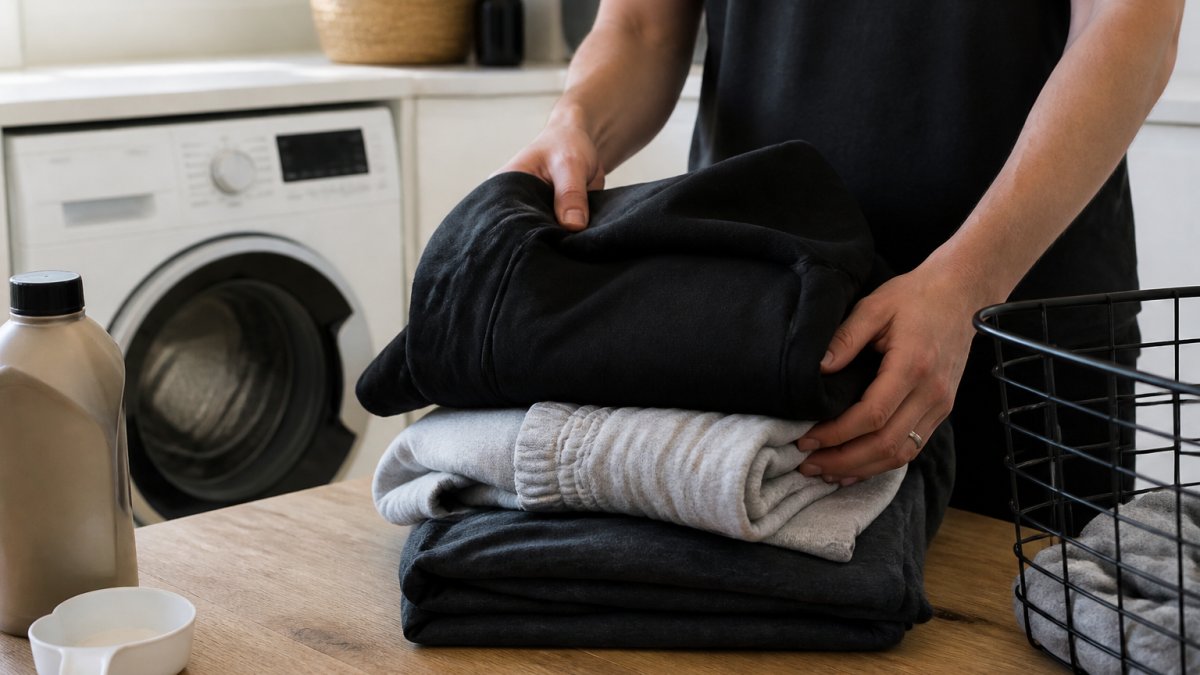
Here is the short version: turn everything inside out, wash cold on a gentle cycle, use less detergent than you think, and keep the heat away.
The longer version matters because heavyweight cotton differs from thin activewear: it holds more water, takes longer to dry, and traps detergent if you overdo it.
What You'll Need Before You Start
- A gentle, bleach-free laundry detergent
- Baking soda for odours and stain lifting
- A mesh laundry bag for drawstrings and small items
- White vinegar as a natural fabric softener
- A drying rack or flat drying surface
Skip the fabric softener. It coats cotton fibres and reduces breathability, which is the last thing you want in gymwear.
How to Prevent Cotton Gymwear Shrinkage
Cotton shrinks because heat and agitation make the fibres contract. Control both and shrinkage stops being a problem. The two settings that matter most are water temperature and cycle length.
Water Temperature and Wash Cycle Settings
Use cold water, always. Hot water is the fastest way to shrink cotton and fade colour.
- Water temperature: Cold (20°C or below)
- Cycle: Delicate or gentle
- Spin speed: Low to medium
- Wash load: Half-full, never packed
A cold rinse keeps colour fastness intact. A gentle cycle reduces the friction that pulls fibres tight.
If a garment is labelled preshrunk, you have extra margin. Quiet Unity's heavyweight pieces use preshrunk cotton, which keeps shrinkage low across repeated washes.
How to Remove Sweat Odours from Cotton
Sweat is mostly water and salt and rinses out easily. The smell that lingers in heavy cotton comes from skin oils and bacteria, plus the detergent residue that traps them inside the cloth.
The fix is not a stronger detergent but a periodic deep clean, plus habits that stop the build-up in the first place.
Why Normal Washing Leaves Odour Behind
Three mechanisms keep odour in heavy cotton:
- Sebum and body-oil binding. Skin oils cling to cotton fibres and are not fully removed by cold water alone. They oxidise over time and hold odour.
- Detergent residue. Using too much detergent, or washing in a packed drum, leaves a film that traps bacteria and smell.
- Fabric softener coating. Softener leaves a waxy layer that seals odour into the fibre and blocks breathability.
People who train daily commonly report odour appearing after roughly 10-15 washes, not from day one, timing that points to cumulative residue, not a single bad wash.
The Deep-Clean Soak (Do This Monthly)
This is a stripping soak, not a freshen-up. Use it when a garment smells clean out of the wash but turns sour within an hour of wearing.
- Fill a basin or bucket with cool water (20°C or below).
- Add half a cup of baking soda and one cup of white vinegar. Let it fizz out before adding the garment.
- Submerge the item fully and weigh it down so it stays under the surface.
- Soak for 30-60 minutes. For a 400 gsm and above piece, go the full hour.
- Lift the garment out and squeeze gently. Do not wring.
- Run a normal gentle cycle with a reduced detergent dose (roughly half the scoop).
- Air dry in indirect sunlight.
Baking soda neutralises the acidic compounds in sweat. Vinegar dissolves the alkaline detergent film that holds bacteria. Together they reset the fabric rather than masking the smell.
A Note on Heavier Weights
The denser the cloth, the longer it holds water and the longer residue stays in contact with the fibre. For 400 gsm and above, add an extra rinse cycle. For 200-350 gsm, one extra rinse every few washes is usually enough, and 180-220 gsm tees rarely need the full soak unless you train in them daily.
What Not to Use
- Bleach. It weakens natural fibres and dulls dyed cotton. It also leaves its own residue.
- Fabric softener. It coats fibres and traps odour. Skip it entirely on gymwear.
- Hot water soaks. Heat sets odour compounds into the fibre rather than releasing them.
- Enzyme detergents on protein stains. They can help with sweat, but on heavy cotton they are less effective than a proper strip because the residue is trapped below the surface.
Everyday Habits That Prevent Odour Build-Up
- Wash gymwear within 24 hours of wearing it. Damp, sweaty cotton left in a hamper is where bacteria multiply.
- Turn garments inside out so the skin-side surface gets the most agitation.
- Use half the detergent you think you need. Heavy cotton holds suds.
- Air the garment between wears if you are not washing it immediately.
Can You Wear Heavy Cotton in Heat?
Yes, you can wear heavy cotton in heat, and it often performs better than thin synthetic blends.
The catch is weight. A 420 gsm hoodie in summer will feel heavy. A lighter heavyweight tee will not.
- Best for hot weather: Heavyweight tees in the 180-220 gsm range
- Best for cooler training: Hoodies and sweatpants at 400 gsm and above
- Avoid in peak heat: Thick fleece and lined pieces
Moisture-wicking synthetics dry faster, but they hold odour. Cotton breathes and washes clean. For most training, cotton wins on comfort and long-term fibre integrity.
Drying Heavy Cotton: Tumble Dry vs Air Dry
Air drying is the better default for heavy cotton, but the reason is more specific than "heat is bad": how you dry it determines whether the garment keeps its shape, weight and fibre structure over 100+ washes.
A useful rule of thumb: the heavier the cloth, the more water it retains after the spin cycle, and the more important it is to dry it flat rather than hanging.
How GSM Changes Drying Time and Method
| Fabric weight | Water retained after spin | Best drying method | Typical dry time (indoor, 20°C) |
|---|---|---|---|
| Under 200 gsm | Low | Line or hanger | 3-5 hours |
| 200-350 gsm | Moderate | Line, reshaped by hand | 6-10 hours |
| 400 gsm and above | High | Flat dry, then finish on a line | 12-24 hours |
The heavier the piece, the more you should treat drying as a shaping step. Lay a 420 gsm hoodie flat on a rack, smooth the shoulders and hem into their natural line, and let it dry mostly flat. Once it is damp rather than wet, move it to a hanger to finish.
Flat Dry vs Line Dry: When to Use Each
- Flat dry is best for hoodies, sweatpants, thick tees and anything 400 gsm and above. It prevents the shoulder and hem stretch that comes from hanging wet weight.
- Line dry works well for lighter heavyweight tees (180-220 gsm) and for the final stage of heavier pieces once they are no longer dripping.
- Hanger dry is fine for tees and lighter pieces, but avoid it for wet hoodies and sweatpants.
If you are short on flat space, dry the garment flat on a rack for the first few hours, then move it to a hanger. That captures most of the shape benefit without needing a full drying room.
Tumble Drying: When It Is Acceptable
Tumble drying on low heat is acceptable when you need speed, but it is a trade-off. Two rules keep it safe:
- Low heat only. High heat is the single biggest cause of shrinkage and fibre breakdown in heavy cotton.
- Pull the garment out slightly damp. Finishing on a line or flat rack avoids the last, most damaging part of the cycle.
People often tumble dry on low, then wonder why a 420 gsm hoodie feels lighter and looser after a year. The answer is usually fibre compaction and surface pilling from repeated tumbling, not shrinkage alone.
Spin Speed and Water Retention
Spin speed matters more than most guides admit. A low to medium spin (around 600-800 rpm) removes enough water to speed drying without crushing the fibre structure, while a very high spin can distort seams and leave deep creases that are hard to press out.
If your machine lets you choose, set the spin to medium for 400 gsm and above, and low for anything with a printed or embroidered surface.
Long-Term Fibre Integrity
Drying is where long-term fibre integrity is won or lost. Over 100+ washes, the pieces that survive best were air dried flat, washed cold, and never exposed to high heat. Pilling and thinning are not inevitable with heavy cotton; they come from repeated friction and heat. Control those two variables and a 420 gsm hoodie can stay dense and structured for years.
GSM-Specific Care: Matching the Wash to the Weight
GSM stands for grams per square metre, and it tells you how heavy the fabric is. Lighter cloth needs less care.
- Under 200 gsm: Standard gentle wash, dries fast
- 200-350 gsm: Gentle cycle, air dry preferred
- 400 gsm and above: Half-load washes, flat dry, extra rinse
The Quiet Unity Heavyweight Box Hoodie sits at 420 gsm, which puts it in the heavy tier.
Heavier cloth also holds more water. A half-full wash load gives it room to move and rinse properly.
Common Mistakes That Damage Heavy Cotton
Most heavy cotton fails early because of a handful of repeated errors. Fix these and your gymwear will hold up for years.
- Using hot water: Shrinks cloth and fades colour
- Overloading the machine: Traps detergent and stresses seams
- Adding fabric softener: Coats fibres and kills breathability
- Tumble drying on high: Breaks down fibre integrity fast
- Bleaching: Weakens natural fibres and dulls colour
- Washing with heavy items: Zips and hooks snag the cloth
Precision stitching and double needle seams only help if the wash cycle respects them; a gentle cold cycle does more for durability than any detergent on the market.
Conclusion
Heavy cotton gymwear rewards good habits. Cold water, gentle cycles, less detergent and air drying will keep your pieces in rotation for years. Get those four things right and the rest takes care of itself.
Quiet Unity builds heavyweight pieces for exactly this kind of long-term wear. Our gear is made from premium cotton with low shrinkage performance and durable construction.
Frequently Asked Questions
Does heavy cotton shrink in the wash?
Heavy cotton can shrink if washed in hot water or tumble dried on high heat. Most premium pieces are preshrunk, which reduces shrinkage significantly. To prevent cotton gymwear shrinkage, wash at 30°C or colder, use a gentle cycle, and air dry or tumble dry on low. Following these steps keeps your 420 GSM pieces true to size for years.
How do you remove odours from heavy cotton gymwear?
To remove sweat odours from cotton, add half a cup of baking soda to the wash cycle alongside your regular detergent. Baking soda neutralises odour-causing bacteria without harsh chemicals. For stubborn smells, soak the garment in cold water with vinegar for 30 minutes before washing. Avoid fabric softener, which traps residue and locks in odours over time.
Can you wear heavy cotton in heat?
Yes, you can wear heavy cotton in heat, though it performs differently from moisture-wicking synthetics. Heavy cotton absorbs sweat rather than repelling it, which keeps the fabric breathable but means it holds moisture longer. For intense training in warm conditions, choose lighter GSM pieces or wear heavyweight cotton for lower-intensity sessions and everyday wear.
Can you wash gym clothes at 40 degrees?
Washing gym clothes at 40°C is acceptable for cotton and cotton-rich blends, but 30°C is safer for heavyweight pieces. Higher temperatures increase the risk of shrinkage and fade colour faster. If your gymwear has elastane or synthetic blends, stick to 30°C or a cold rinse to protect stretch recovery and fibre integrity.
Most gymwear fails because of the wash, not the training. Quiet Unity designs heavyweight cotton pieces built to survive both, with preshrunk fabric, double needle stitching and a fit that holds its shape. Shop the collection and train in gear that stays out of your way.