Guides · · 10 min read
Minimalist Wardrobe Essentials for Men: 2026 Guide
Build a minimalist wardrobe for men with durable essentials, a capsule checklist, and styling tips. Create a timeless, versatile rotation that lasts.

Table of Contents
- Why a Minimalist Wardrobe Works for Men
- Capsule Wardrobe for Men Checklist: Core Essentials
- How to Style Minimalist Streetwear for Any Setting
- Durable Heavy Cotton Clothing: What to Look For
- Building a Capsule Wardrobe with Limited Space
- Caring for Your Minimalist Wardrobe Essentials
- Conclusion: Your Quiet, Disciplined Wardrobe
- Frequently Asked Questions
Last Updated: October 2, 2026
Why a Minimalist Wardrobe Works for Men
A minimalist wardrobe is a curated collection of versatile, timeless clothing that covers every part of your life without the clutter of trend-driven pieces you rarely wear. For men who train hard and work hard, that discipline pays off daily.
Capsule Wardrobe for Men Checklist: Core Essentials
The core of a capsule wardrobe for men checklist is roughly 25 to 35 items, chosen so almost every piece works with every other piece. The number matters less than the logic: neutral tones, consistent fit, and no item that only works one way.
Here is the working checklist we recommend.
Tops and Base Layers
- 5-6 heavyweight cotton tees in white, black, grey and one earth tone
- 2-3 long-sleeve tees or lightweight knits for layering
- 1 oversize tee for training and relaxed days
- 1 mid-layer: hoodie or crew sweat
A common mistake is buying tees in five different fits. Pick one silhouette and repeat it. Our Classic Oversized Tee is built on a boxy, dropped-shoulder cut in 100% combed cotton at 6.5 oz, preshrunk, so the fit you buy is the fit you keep.
Bottoms and Footwear
- 2 pairs of shorts: one active, one relaxed
- 2 pairs of sweatpants or joggers
- 1 pair of dark denim or chinos
- 1 clean white sneaker, 1 training shoe, 1 boot
| Category | Item | Best For | Quiet Unity Option |
|---|---|---|---|
| Active short | Lightweight split-side short | High-energy training | Men's Active Shorts, $68 |
| Relaxed short | Heavyweight cotton drawstring | Weekends, casual wear | Loose Fit Drawstring Shorts, $55 |
| Fleece short | Brushed fleece, raw hem | Cooler sessions, streetwear | Heavy Sweat Short, $60 |
| Sweatpant | Barrel leg, fleece lined | Cold weather, travel | Wide Sweatpant, $95 |
How to Style Minimalist Streetwear for Any Setting
Styling minimalist streetwear comes down to one rule: keep the palette tight and let fit and fabric do the talking. Monochrome or two-tone outfits read as intentional; four colours read as accidental. But a tight palette only works if the fit is right for your build, and that is where most generic guides stop short.
Fit by build, not by trend
A garment that looks sharp on a 180 cm ectomorph can look sloppy on a 175 cm endomorph, even in the same size. The fix is not a new wardrobe; it is knowing which two adjustments matter for your frame.
- Tall and lean: Boxy, dropped-shoulder cuts add visual weight. Avoid slim-fit tees that cling and exaggerate length. A 6.5 oz heavyweight tee holds its shape better than a 4 oz one, which drapes and sags.
- Broad shoulders or stocky: Look for a slightly tapered waist so the hem does not flare. Straight-leg sweatpants and chinos balance a wider upper body better than skinny cuts.
- Shorter frame: Keep tops untucked but hemmed above the hip bone. A barrel-leg or wide sweatpant can swamp a shorter leg line, so a straight or tapered leg usually reads cleaner.
- Longer torso: A mid-layer that finishes at the hip bone, not below it, stops the outfit looking stretched.
The three-outfit system
Rather than memorising rules, build three repeatable outfits from the same core pieces. This is the system competitors rarely give you.
- Training-to-street: Heavyweight tee as base, oversize tee or knit over it, active or fleece short, clean white sneaker. Works for the gym, the coffee run and casual errands.
- Smart casual: Long-sleeve tee or lightweight knit, dark denim or chinos, clean white sneaker or boot. Tuck nothing, roll nothing, avoid visible logos. A quiet emblem works; a billboard does not.
- Cold-weather layer: Heavyweight tee, hoodie or crew sweat, wide sweatpant, boot. The mid-layer does the work; the base layer stays neutral.
The gym-to-office transition
The gym-to-office transition is where most wardrobes fail. The fix is layering, not changing. Wear a heavyweight tee as your base, add an oversize tee or knit over it, and finish with clean sweatpants or chinos. Nothing about that outfit signals "gym," because nothing about it is loud.
Lifestyle-specific capsules
A remote worker and a corporate professional need different capsules from the same core list. The remote worker can weight the capsule toward tees, knits and relaxed bottoms, because video calls only show the top third of the outfit. The corporate professional needs one structured layer (a knit or overshirt), one pair of dark chinos or denim, and one clean leather or suede boot, because those three pieces carry most in-person meetings.
Colour discipline in practice
Pick two neutrals (for example, black and grey, or navy and stone) and one earth tone. Every top, bottom and layer should sit inside that set. When you buy, hold the new piece against the three outfits above. If it does not slot into at least two of them, it does not belong in the capsule.
Durable Heavy Cotton Clothing: What to Look For
Durable heavy cotton clothing is defined by three measurable things: fabric weight, fibre quality and construction. Get those right and a garment outlasts three cheap replacements.
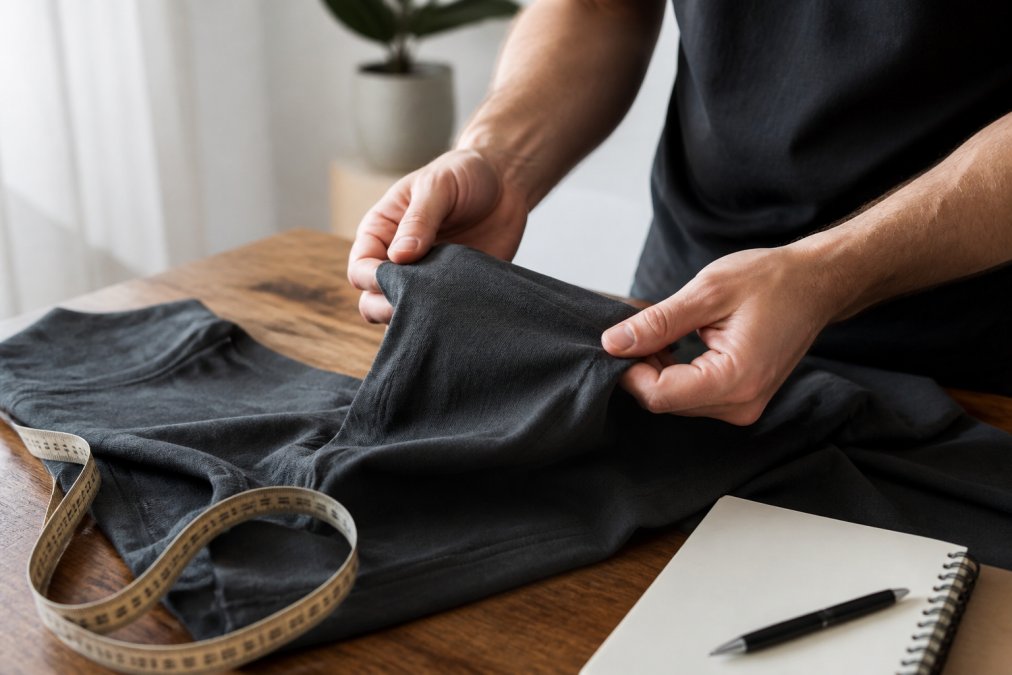
Then check fibre and finish:
- Combed cotton resists pilling better than standard cotton
- Preshrunk fabric holds its size after the first wash
- Double needle stitching at stress points stops seam failure
Building a Capsule Wardrobe with Limited Space
A capsule wardrobe fits in a single wardrobe or a 60 cm rail if you organise by function, not by colour. Limited space forces better decisions, and that's a feature, not a limitation. But space is only half the problem. The other half is keeping the capsule alive over years, which means repair, care and rotation, not just storage.
A storage system that survives real life
Here is a capsule organisation method that works in a small room:
- Hang training pieces together, daily wear separately, so you never mix gym kit with meeting kit.
- Fold tees and shorts vertically so every item is visible. If you cannot see it, you will not wear it.
- Keep one "rotation" drawer for the current season only.
- Store off-season pieces in a single under-bed box, ideally with a cedar block or lavender sachet to deter moths.
- Keep one small repair kit in the same drawer: needle, thread in your two neutral colours, spare buttons, and a fabric shaver for pilling knits.
Rotation, not storage, is the real skill
Capsule rotation matters more than storage. Move winter fleece out in spring, move shorts out in autumn, and you'll never dig through a pile to find what you need. A simple rule: if a piece has not been worn in a full season, it goes into the under-bed box, not back on the rail. If it is still unworn after a second season, it leaves the capsule entirely.
Sustainable care and repair
Garment care supports the whole system. Wash at 30°C on a gentle cycle, inside out, and skip the dryer where you can. Heat is what breaks down cotton fibres, so line drying in shade keeps structure and colour for years. That is the real version of sustainable fashion: not buying recycled, but wearing what you already own for longer.
Cost per wear, not sticker price
Cost per wear is the metric that matters. A $55 tee worn twice a week for two years costs less per wear than a $20 tee worn ten times. That is the argument for quality over quantity in one sentence. When space is tight, every item has to earn its place, and cost per wear is the honest way to decide whether it does.
Lifestyle-specific space solutions
A remote worker with a small flat can run a 25-item capsule on a single 60 cm rail plus one drawer, because the wardrobe is weighted toward tees, knits and relaxed bottoms. A corporate professional in a shared house needs the same rail plus one hanging section for structured layers and one boot. The difference is not the amount of space; it is which pieces get the hanging space. Structured layers hang; everything else folds.
Caring for Your Minimalist Wardrobe Essentials
Caring for minimalist wardrobe essentials is mostly about doing less, more carefully. Over-washing destroys more clothing than wearing it does.
- Wash at 30°C on a gentle cycle, inside out
- Do not bleach, ever
- Tumble dry low or line dry in shade
- Iron at low temperature, avoiding any print
- Do not dry clean cotton knits
Conclusion: Your Quiet, Disciplined Wardrobe
The hardest part of building a minimalist wardrobe isn't choosing pieces. It's resisting the urge to add more once the system works.
Frequently Asked Questions
What is the 3-3-3 rule for men's clothing?
The 3-3-3 rule is a simple guideline for building a minimalist wardrobe: choose 3 tops, 3 bottoms, and 3 pairs of shoes that can be mixed and matched to create at least 9 different outfits. For example, 3 t-shirts, 3 pairs of shorts or trousers, and 3 pairs of footwear. This rule helps you focus on versatile, timeless pieces rather than a large, unwieldy collection. It's a practical starting point for anyone new to capsule wardrobes.
What should a minimalist men's wardrobe include?
A minimalist men's wardrobe should include a small number of high-quality, versatile items: plain t-shirts, a couple of button-down shirts, a well-fitted pair of trousers, shorts for warmer weather, a jacket or overshirt, and comfortable, durable footwear. Stick to neutral tones like black, white, grey, and navy. Focus on durable heavy cotton clothing and timeless pieces that transition easily between gym, work, and casual settings. Aim for around 20-30 items total, including accessories.
What are the best fabrics for a durable, minimalist wardrobe?
Heavyweight cotton (such as 6.5 oz or 380 gsm) is excellent for durability and breathability. Look for 100% combed cotton or cotton-polyester blends with a high cotton content. These fabrics hold their shape, resist pilling, and soften with age. Avoid thin, flimsy materials that wear out quickly. For activewear, consider fabrics with some stretch, but prioritise natural fibres for everyday essentials. Proper care, like washing at 30°C and avoiding bleach, extends the life of any garment.
How can you transition gymwear into everyday streetwear?
Choose gymwear with a minimalist aesthetic: solid colours, no loud logos, and clean lines. A heavy cotton oversized tee or a pair of loose-fit drawstring shorts can work for both training and casual outings. Pair them with neutral sneakers and a simple jacket. The key is fit and fabric: opt for pieces that look intentional rather than purely functional. Quiet Unity's heavy cotton pieces, for example, are designed to move seamlessly from the gym to the street without looking out of place.
How do you start a capsule wardrobe with limited space?
Start by decluttering: remove anything you haven't worn in the past year. Then, choose a colour palette (e.g., black, white, grey, navy) and select 3-5 tops, 3-4 bottoms, and 2-3 pairs of shoes that fit that palette. Use vertical storage like hanging shelves or over-the-door organisers. Rotate seasonal items. A capsule wardrobe for men checklist can help you stay on track. The goal is to own fewer, better items that all work together.
Why is heavy cotton better for a minimalist wardrobe?
Heavy cotton (like 6.5 oz or 380 gsm) is more durable, holds its shape better, and drapes more cleanly than lighter fabrics. It resists wear and tear from frequent washing and intense training, making it ideal for a minimalist wardrobe where each piece must last. Heavy cotton also feels more substantial and premium. Look for preshrunk, combed cotton to minimise shrinkage and pilling. This aligns with the quality over quantity principle central to minimalist style.
Building a wardrobe that works harder than you do takes a starting point. Quiet Unity offers heavyweight cotton essentials designed in Australia, including the Classic Oversized Tee, the Men's Active Shorts and the Wide Sweatpant, each made to move between training and daily life without compromise. Shop Men and build a wardrobe that stays out of your way.
More from the journal