Guides · · 11 min read
7 Steps to Layer Gym Clothes for Cold Weather Training
Master layering gym clothes for cold weather with 7 practical steps. Stay warm, manage sweat and avoid overheating from warm-up to cool-down.

Last Updated: October 26, 2026
Quick Summary
Layering gym clothes for cold weather training means wearing a moisture-wicking base layer, a removable fleece or knit mid layer, and a windproof outer layer you can strip off once warm. Add gloves, warm socks and a beanie for extremities, and avoid cotton against the skin.
- Start slightly cool, because feeling comfortably warm standing still means you will overheat within ten minutes.
- A 10°C morning with a 30 km/h wind feels closer to 5°C, so add the shell before another mid layer.
- Most heated gyms sit between 16°C and 20°C, where a base plus light mid layer is usually enough.
- Choose a mid layer with a full zip so you can open or remove it mid-session.
- Pack a dry base layer in your bag to prevent post-session chill on the trip home.
Table of Contents
- Why Layering Gym Clothes Beats One Heavy Layer
- What to Wear to the Gym in Winter: The Short Answer
- Step 1: Choose the Best Base Layer for Working Out in Cold Weather
- Step 2: Add a Mid Layer You Can Remove Mid-Session
- Step 3: Pick an Outer Layer for Wind and Weather Protection
- How to Layer Clothes for Outdoor Workouts Without Bulk
- How to Avoid Overheating During Winter Workouts
- The Gym Commute: Layering for the Trip, Not Just the Session
- What to Check Before You Walk Out the Door
- Frequently Asked Questions
Why Layering Gym Clothes Beats One Heavy Layer
Cold-weather training punishes the wrong outfit. A single heavy jumper traps sweat against your skin the moment you warm up, leaving you damp and chilled. Learning the art of layering gym clothes for cold weather training solves that because you control your temperature minute by minute.
The principle is simple: several thin layers trap warm air and let you shed heat fast. One thick layer gives you a single choice, on or off.
The Three-Layer System in Plain Terms
The layering system dresses you in three parts: a base layer that moves sweat away from your skin, a mid layer that holds warmth, and an outer layer that blocks wind and light rain. Each does one job, keeping you warm before you start and dry once you are working hard.
- Base layer: sits against skin, wicks moisture, dries fast.
- Mid layer: traps body heat, easy to remove mid-session.
- Outer layer: cuts wind chill, sheds light rain, packs away small.
What to Wear to the Gym in Winter: The Short Answer
For most cold-weather sessions, wear a moisture-wicking base layer, a removable fleece or knit mid layer, and a windproof outer layer you can strip off once you are warm.
That is the structure. The exact weights change with temperature, wind and whether you train indoors or out. Use the table below as a starting point, then adjust for intensity and time outside.
| Conditions | Base layer | Mid layer | Outer layer | Extremities |
|---|---|---|---|---|
| Indoor gym, 16-20°C | Lightweight synthetic or merino tee or long-sleeve | Light fleece or knit you can remove after warm-up | None needed | None |
| Outdoor, 10-15°C, light wind | Lightweight long-sleeve synthetic or merino | Midweight fleece or knit | Thin windproof shell | Light gloves, beanie optional |
| Outdoor, 5-10°C, moderate wind | Midweight long-sleeve synthetic or merino | Fleece or light quilted mid layer | Windproof shell with hood | Gloves, beanie, warm socks |
| Outdoor, 0-5°C, strong wind or light rain | Midweight merino or synthetic, plus a thin second base if you run cold | Fleece or quilted mid layer | Windproof and water-resistant shell | Insulated gloves, beanie, wool socks |
| Outdoor, below 0°C or heavy wind chill | Midweight merino base plus thin insulating base | Fleece or synthetic-insulated mid layer | Windproof and water-resistant shell | Insulated gloves, beanie, wool socks, neck gaiter |
A few rules of thumb make the table easier to apply:
- Start slightly cool. If you are comfortably warm standing still, you will overheat within ten minutes. Aim to feel cool but not cold.
- Wind chill matters more than the thermometer. A 10°C morning with a 30 km/h wind feels closer to 5°C. Add the shell before another mid layer.
- Indoor sessions need less than you think. Most heated gyms sit between 16°C and 20°C. A base layer plus a light mid layer you can remove after warm-up is usually enough.
Step 1: Choose the Best Base Layer for Working Out in Cold Weather
The best base layer for working out in cold weather is a thin, close-fitting piece in a synthetic fabric or merino wool.
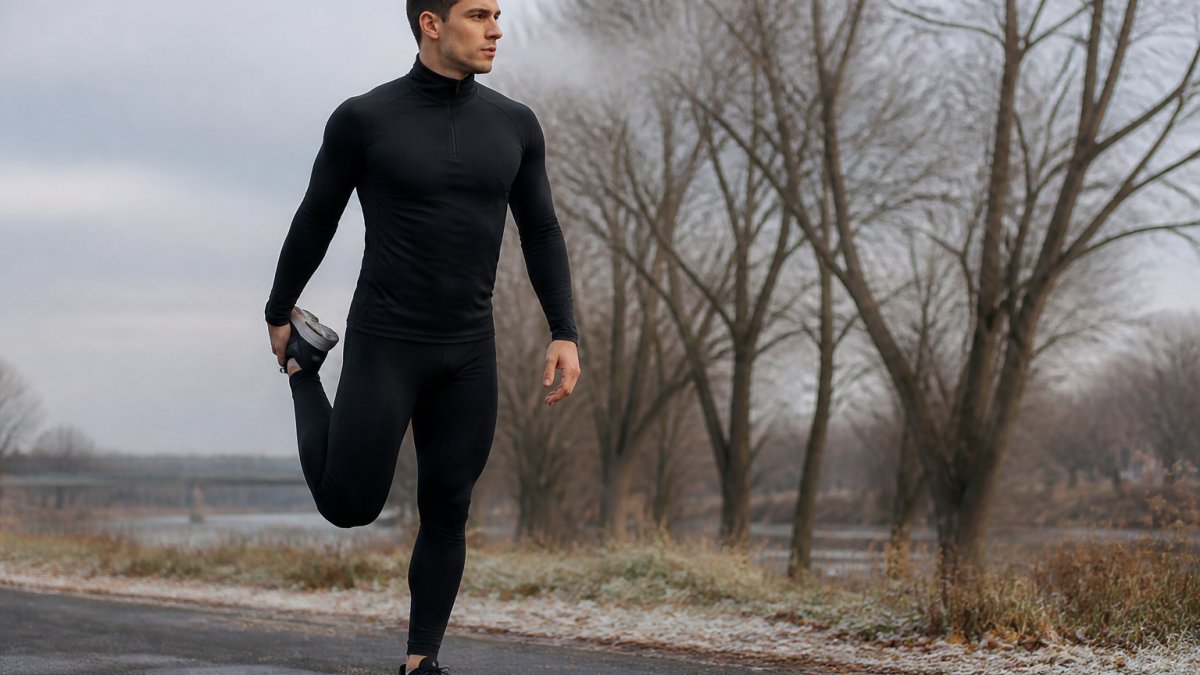
Fit matters more than most people think.
Skip cotton here. Cotton holds sweat, stays wet and pulls heat from your body once you stop moving.
If you are rebuilding your base layer wardrobe, our training essentials cover the tanks, tights and shorts that sit closest to the skin.
Step 2: Add a Mid Layer You Can Remove Mid-Session
Your mid layer is the insulating layer, and it should be the easiest thing to take off. Fleece, heavier knits and quilted tops trap body heat without much weight.
Tips For Exercising Outside In The Winter - How To Dress For Cold Weather Workouts Outside
Feldman Physical Therapy and Performance
A cropped full-zip hoodie in a heavy cotton-rich knit works well for indoor sessions and short outdoor warm-ups. Our Vintage Zip Hoodie is built from 400 gsm cotton-rich knit with a full zip, which makes it a realistic mid layer to shed between sets.

For a lighter, more fitted option, a midweight knit jacket like our Sculpt Jacket sits neatly under an outer shell. For choosing a removable layer by fabric weight, fit and season, see our guide to what a pump cover is and how to choose one.
Step 3: Pick an Outer Layer for Wind and Weather Protection
Wind chill does more damage than temperature alone. An outer layer should block wind, shed light rain and pack down small enough to stash in a gym bag.
Wear it on the walk to the gym or the first ten minutes of an outdoor run. Once your body heat builds, take it off and tie it around your waist or drop it in a locker.
A fleece-lined full-zip hoodie such as our Fleeced Full-Zip Boxy Hoodie works as an outer layer on dry, cold days, and its 350 gsm fabric adds real warmth when the wind picks up.

How to Layer Clothes for Outdoor Workouts Without Bulk
Bulk comes from fit, not the number of layers. Three thin layers that fit properly move with you better than one thick jumper. Keep each close to the body without compressing it.
- Choose base layers that fit snug but not tight.
- Size mid layers to sit over the base without bunching at the shoulders.
- Keep the outer shell trim through the torso.
Getting oversized and boxy fits right is the part most people get wrong. Our guide to sizing oversized and boxy fits with flat measurements explains pit-to-pit, length and the between-sizes rule so your layers stack cleanly.
How to Avoid Overheating During Winter Workouts
Overheating during winter workouts usually comes from starting too warm. If you are toasty standing still, you will be soaked ten minutes in. Start slightly cool and let your body heat catch up.
The harder question is how much to shed, and when. A hard interval session generates far more heat than an easy walk, and a heated studio changes the maths entirely.
Match Layers to Training Intensity
Use the intensity of the session to decide how many layers you wear once you are warm:
- High-intensity intervals or a hard run: Start with base plus mid plus shell, remove the shell within five to ten minutes and the mid layer within fifteen. Train in the base layer alone once sweating.
- Steady-state run or cycle: Keep the base and mid layer for the first half, open the mid zip as you warm up, and remove it if sweat builds on your back. The shell comes off early.
- Strength training in a cold gym: Keep the base and mid layer on between sets, and remove the mid layer during long working sets. A full-zip mid layer is easiest because you can open it without taking it off.
Indoor Versus Outdoor: Different Problems, Different Fixes
Indoor and outdoor sessions fail in opposite ways. Outdoors, the risk is underdressing and losing heat before you start. Indoors, it is overdressing and overheating once the room warms up.
- Outdoors: Wear the shell for the first ten minutes, then remove it. Keep the mid layer on until you feel sweat on your back, then remove it. The base layer stays on throughout.
- Indoors: Wear the base layer and a light mid layer from home, remove the mid layer after warm-up, and train in the base layer. A heavy outer layer is almost always unnecessary indoors, even in winter.
- Transition spaces: A cold corridor, a poorly heated changing room or a studio with the door open can blur the line. Treat these as outdoor conditions for the first few minutes and shed layers as you would outside.
Habits That Keep You Dry
- Remove a layer the moment you feel sweat building on your back.
- Open your outer zip before you take it off, so you cool down gradually.
- Choose breathable technical fabrics over thick cotton for anything against the skin.
The Gym Commute: Layering for the Trip, Not Just the Session
The commute is where most layering plans fall apart.
Here is how we would handle a cold early-morning trip:
- Wear your base layer and mid layer from home.
- Add the outer shell for the walk or ride.
- Strip the shell at the door and stash it in your bag.
- Train in the base plus mid layer, removing the mid layer as you warm up.
- Swap the damp base for a dry top before you leave.
- Add a clean, neutral hoodie or jacket for the trip to work.
That last step is where versatile pieces earn their place. A zip hoodie in a quiet, logo-free design reads as everyday wear, not gym kit.
Watch out: leaving the gym in a damp base layer on a cold morning is the fastest way to lose body heat. Pack a dry top, every time.
What to Check Before You Walk Out the Door
A quick pre-session check keeps the whole system working. Run through this list:
| Check | Why It Matters | Quick Fix |
|---|---|---|
| Base layer fits close | Moves sweat off skin | Size down or choose a fitted cut |
| Mid layer has a full zip | Easy to remove mid-session | Swap for a zip-through style |
| Outer layer blocks wind | Cuts wind chill | Add a thin shell with a hood |
| No cotton against skin | Cotton holds sweat | Switch to polyester, nylon or merino |
| Extremities covered | Hands, feet and head lose heat fast | Add gloves, warm socks, beanie |
| Dry top in your bag | Prevents post-session chill | Pack one the night before |
Cold-weather training rewards preparation more than any other session. Get the layers right and the weather stops being the excuse.
Cold mornings test your kit as much as your discipline. Quiet Unity builds gymwear that stays out of the way while you train, from heavy cotton construction to quiet, logo-free designs that move from the gym floor to the street.
Frequently Asked Questions
What three layers should cold-weather training clothing consist of?
A base layer against the skin that moves sweat away, a mid layer that traps warmth, and an outer layer that blocks wind and light rain. The base layer does the sweat management, the mid layer provides insulation you can remove once you warm up, and the outer layer is the shell you strip off first. Together they let you adjust as your body heat rises instead of choosing one heavy garment and overheating in it.
Should I wear a cotton shirt for cold-weather training?
Not as your base layer. Cotton holds sweat against your skin, and once it is wet it stops insulating and gets cold fast, especially when you slow down or step into wind. Use a synthetic or merino base layer for the workout itself. Heavier cotton pieces work well as a mid or outer layer for the commute and for the walk to the gym, where you are not sweating hard in them.
How do I layer gym clothes without overheating during a winter workout?
Start slightly cold rather than warm, and plan to remove layers as you go. Do your warm-up in the full set-up, shed the outer layer before your first working set, and drop the mid layer once you are sweating steadily. Zip vents and full-zip hoodies make this quick. If you finish drenched, you layered too heavily at the start rather than adjusting mid-session.
How should I dress for the gym commute when it is cold outside but warm inside?
Treat the commute and the session as two separate outfits. Wear a warm mid or outer layer over your training kit for the trip, then remove it before you start training indoors. A full-zip hoodie or a cropped track jacket over a base layer works well because you can take it off without disturbing what is underneath. Pack the removed layer in your bag rather than leaving it on.
