Guides · · 10 min read
7 Affordable Alternatives to Expensive Designer Basics
Find designer basics for less with 7 affordable alternatives. Compare heavy cotton tees, sweatpants and hoodies on fabric weight, fit and cost per wear.

Last Updated: October 30, 2026
Quick Summary
Affordable alternatives to expensive designer basics come down to three checks: fabric weight, construction, and fit. Look for heavyweight combed cotton with double-needle stitching and preshrunk fabric, then compare full garment measurements against a piece you already own rather than the letter on the tag.
- Heavier cotton tees carry a higher gsm number, which guides how the garment drapes and how opaque it is.
- Check for double-needle stitching, combed cotton, preshrunk fabric, and a dense knit you cannot see daylight through.
- Take four measurements from a garment you love: chest, body length, shoulder width, and sleeve length.
- Cost per wear is the price divided by the number of times you actually wear the garment.
- Before buying, check that each piece pairs with at least three things you already own.
Table of Contents
- Why Designer Basics Cost More Than They Should
- How to Spot Quality Basics for Less
- Heavy Cotton T-Shirts That Hold Their Shape
- Building a Minimalist Wardrobe on a Budget
- How to Build a Capsule Wardrobe Around Fewer, Better Pieces
- The Cost-per-Wear Maths That Beats a Designer Price Tag
- Ethical and Environmental Trade-Offs of Buying Fewer Basics
- Shop the Quiet Unity Basics Range
- Frequently Asked Questions
Why Designer Basics Cost More Than They Should
A plain white tee should not cost more than a decent pair of shoes. Yet here we are. The luxury markup on designer basics is rarely about the cloth.
Quiet Unity exists because we got tired of watching that maths play out.
Below, we break down what actually makes a basic worth buying, where the money goes, and how to spend less without looking like you did.
How to Spot Quality Basics for Less
Quality basics for less come down to three checks: fabric weight, construction, and fit. Get those right and you can ignore the label entirely.
Fabric weight is measured in grams per square metre (gsm).
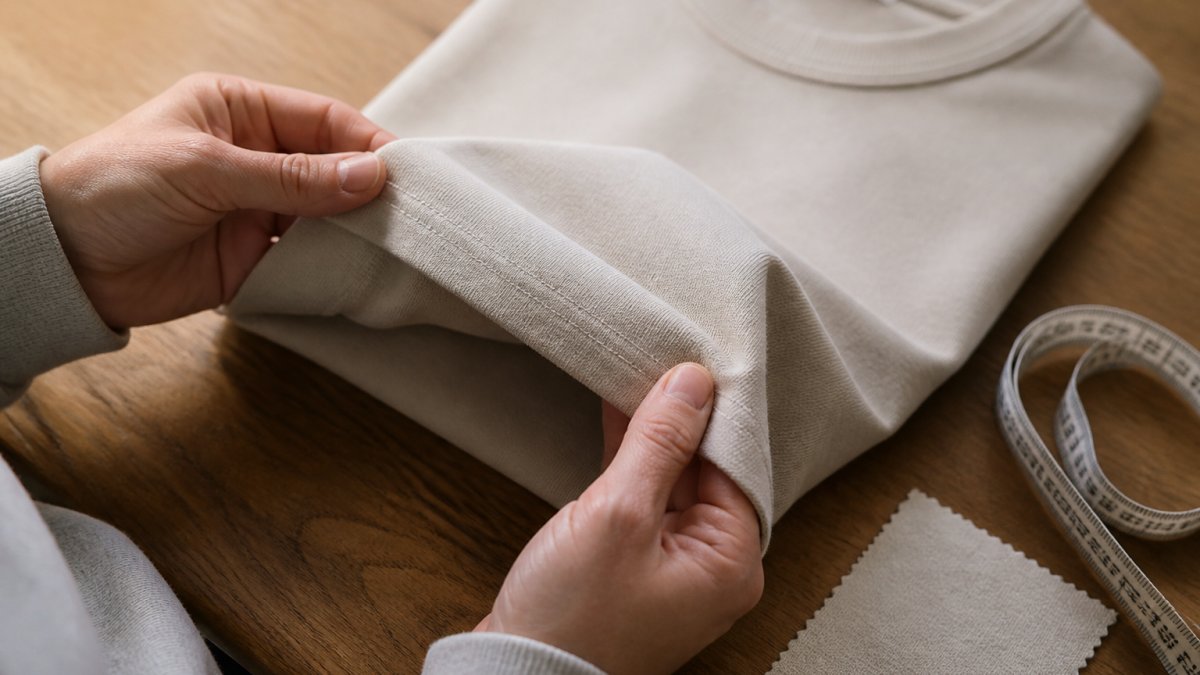
Fabric weight and construction checks
Pick up a garment and turn it inside out. What you are looking for:
- Double-needle stitching at the hem and shoulders, which resists splitting
- Combed cotton rather than carded, because it pills less
- Preshrunk fabric, so the fit you buy is the fit you keep
A common mistake is judging fabric by feel alone in the shop. Soft does not mean durable. Some of the softest cheap tees are also the thinnest. If you are shopping online, check how fabric weight actually compares across garments before you commit, because the same gsm number means different things depending on fibre and knit.
Fit, silhouette and inclusive sizing
Fit is where designer basics earn their reputation, and where cheap alternatives often fall down. A boxy oversized silhouette needs a dropped shoulder and enough length in the body to sit right. A slim fit needs proper armhole shaping.
Check the size chart against a garment you already own and like. Compare chest, length and shoulder measurements, not just the letter on the tag.
Heavy Cotton T-Shirts That Hold Their Shape
Heavy cotton t-shirts are a good place to start your swap. For concrete options that hold their shape without designer prices, see our picks for heavy cotton t-shirts to buy.
Our Unity Classic Oversized Tee is built on heavyweight cotton with double-needle stitching and a preshrunk finish. At $50, it is priced without relying on a visible emblem.
Watch out: heavyweight cotton needs a cooler wash and a low tumble dry.
Building a Minimalist Wardrobe on a Budget
A minimalist wardrobe on a budget is not about owning fewer things for the sake of it.
Start with a narrow palette. Two neutrals, one dark, one accent. Then build outward from the pieces you wear most: a heavy tee, a crew, a relaxed pant, a hoodie.
That discipline is the whole trick. If you want a deeper guide on building one wardrobe that moves from training to everything after, read our gym-to-street wardrobe guide.
How to Build a Capsule Wardrobe Around Fewer, Better Pieces
A capsule wardrobe is a small, fixed set of garments that all work together, chosen so that getting dressed becomes a decision you make once, not every morning. The difference between a capsule that works and one that collapses is fit: a piece that does not fit properly will not be worn, no matter how versatile it looks on paper.
Start with measurements, not letters
Before you buy anything, take four measurements on a garment you already own and love: chest (armpit to armpit, doubled), body length (shoulder seam to hem), shoulder width (seam to seam), and sleeve length. Write them down. Every size chart you encounter should be checked against those numbers, not against the letter on the tag. A brand that publishes full garment measurements in centimetres is telling you it expects you to check, which is a good sign.
Size ranges vary between brands, so check the size chart before you build a wardrobe around a label.
The build, layer by layer
| Layer | What to include | Fit check | Why it earns its place |
|---|---|---|---|
| Base | 2-3 heavy cotton tees | Shoulder seam sits at the edge of the shoulder, body length covers the waistband when standing and sitting | Worn most, washed most, needs to hold shape |
| Mid | 1-2 crews or hoodies | Sleeve ends at the wrist bone, body hits mid-hip | Layers over base, works gym to street |
| Bottom | 1 relaxed sweatpant, 1 short | Waistband sits flat without gaping, rise allows a full squat without pulling | Covers training and casual wear |
| Outer | 1 zip hoodie or jacket | Shoulders align, zip sits flat when closed | Handles cold starts and travel |
Build the base first. It is the layer that touches your skin, takes the most washing, and shows wear fastest. A heavyweight tee at a fair price is a practical basic you can wash without worry. For a focused essentials plan, see our men's capsule wardrobe guide.
The three-pair rule
Before any piece comes home, check that it pairs with at least three things you already own. A heavy tee should work under a crew, under a hoodie, and on its own. A relaxed sweatpant should work with a tee, a crew, and a zip hoodie. If a piece only works with one outfit, it is not a capsule piece; it is a costume.
Cost per wear inside the capsule
A capsule is where cost-per-wear maths pays off most clearly. Run that maths on every piece before you commit: divide the price by the number of wears you expect, and compare the result across options.
Sizing and fit across the range
If you are between sizes, size up on heavyweight cotton and down on stretch fabrics. Heavy cotton has little give; a relaxed sweatpant with an elastic waist has more.
The Cost-per-Wear Maths That Beats a Designer Price Tag
Cost per wear is the price of a garment divided by the number of times you actually wear it.
Cost per wear is calculated by dividing the price by the number of times you wear a garment, so a cheaper piece worn often can be better value than an expensive one worn rarely.
Run the maths before you buy:
- Estimate wears per month
- Multiply by the months you expect it to last
- Divide the price by that total
The result usually reframes the decision. Value for money is not the lowest ticket price. It is the lowest cost per wear on a garment you will actually reach for.
Ethical and Environmental Trade-Offs of Buying Fewer Basics
Fast fashion is cheap because something else absorbs the cost: water, labour, and landfill. Buying fewer, better basics reduces how often you replace them, which cuts the volume of textile waste you generate. But the trade-offs are not as simple as "expensive equals ethical" or "cheap equals bad", and most guides skip the detail.
The three trade-offs that actually matter
Labour transparency. A garment made in a factory with published audit reports and a named supplier list is easier to verify than one with no information.
Material choice. Natural fibres like cotton and wool biodegrade, but conventional cotton is water-intensive and often grown with pesticides. Organic cotton uses less water and fewer inputs, but it costs more and yields less.
Durability versus disposal. A heavyweight cotton tee that lasts 150 washes replaces three cheap tees that last 50 washes each. That is fewer purchases, less packaging, fewer deliveries, and less textile waste. The environmental case for buying fewer, better basics is strongest when the garment is actually durable enough to be worn out, not just expensive enough to feel virtuous.
What to check before you buy
- Does the brand publish a supplier list or audit report?
- Is the fibre content stated clearly, with a percentage for each fibre?
- Is the construction durable enough to justify the price (double-needle stitching, dense knit, preshrunk finish)?
The trade-off nobody names
A higher upfront price is a real barrier. A $50 tee is not affordable for everyone, and saying "buy fewer, better things" without acknowledging that is not honest. The practical middle path is to buy the best you can afford, wear it out, repair it before replacing it, and use resale or vintage for the pieces you cannot buy new.
How this changes the buying decision
Ethical and environmental considerations do not replace the quality checks; they sit alongside them. A durable, well-made basic that you wear for years is both the better value and the lower-impact choice. A cheap basic that loses shape in a season is neither. The direction of travel matters: fewer purchases, longer wear, and repairs before replacements all pull in the same direction, and they all start with buying the right piece once.
Shop the Quiet Unity Basics Range
We built Quiet Unity around one idea: better cloth, considered details, no spectacle.
The range covers the basics you actually replace: heavyweight tees at $55, the Unity Relax Crew at $76, heavyweight sweatpants at $86, and the Fleeced Full-Zip Boxy Hoodie at $104.


Best for: anyone who wants durable, logo-free basics that move from the gym to the street. Skip if: you want trend-led pieces you plan to replace every season.
Browse the full basics range and build the base layer first.
Frequently Asked Questions
What are affordable alternatives to expensive designer basics?
Look for small labels that publish fabric weight and fibre content instead of relying on a logo. Heavyweight cotton tees around 6.5 oz (220 gsm), 350 to 420 gsm sweatpants and preshrunk combed cotton are the benchmarks. Quiet Unity's Classic Oversized Tee at $55 and Unisex Heavyweight Vintage Wash Sweatpants at $86 sit well below designer pricing while listing exact construction details, so you can compare on substance rather than branding.
How can you tell whether a budget basic is good quality?
Check three things before you buy. First, fabric weight: anything under 200 gsm will likely go sheer or lose shape. Second, construction: double needle stitching, preshrunk cotton and clean hems signal a garment built to last. Third, fibre content: 100% combed cotton resists pilling better than blends.
How do you build a minimalist wardrobe on a budget?
Start with a fixed colour palette of two or three neutrals, then buy the heaviest fabric you can afford in each category. A practical core is two heavy cotton t-shirts, one crew sweatshirt, one pair of sweatpants, one pair of shorts and a hoodie for cooler months. Buy one piece at a time, check cost per wear and replace only when a garment fails. Fewer, better pieces reduce both spending and decision fatigue.
Are affordable heavy-cotton basics worth buying?
Yes, when the weight and fibre content are stated clearly. A 6.5 oz 100% combed cotton tee is a heavier-weight option. Heavy cotton gives a structured silhouette and drape.
How can you style basic streetwear pieces in different ways?
Stick to one silhouette and vary the layers. An oversized heavy cotton tee works alone with shorts, under a boxy full-zip hoodie, or with wide leg sweatpants for a tonal set. Keep colours within two or three neutrals so every piece pairs with every other piece. Raw hem details and dropped shoulders add interest without logos, which makes the same garment wearable for training and casual settings.
The challenge is simple: stop paying for a label and start paying for cloth. Quiet Unity designs heavyweight cotton basics in a minimalist, logo-free style, with double-needle construction and preshrunk fabric built to hold their shape. Get started with Quiet Unity and build a wardrobe of fewer, better pieces that earn their cost per wear.
