Guides · · 11 min read
Quality Gym Gear for Lifters: What Actually Lasts
Quality gym gear for lifters: what to look for in durable gymwear, the best fabric for gym clothes, and which weightlifting accessories earn their place.

Table of Contents
- What Quality Gym Gear for Lifters Actually Means
- The Best Fabric for Gym Clothes: What Holds Up Under Load
- Weightlifting Accessories: What Earns Its Place in Your Bag
- Durable Gymwear: Fit, Sizing and the Pieces Worth Buying
- Gym Clothes Care: How to Make Good Gear Last Years
- Building a Starter Kit by Budget and Training Goal
- What to Ignore When You Buy Quality Gym Gear for Lifters
- Conclusion
- Frequently Asked Questions
Last Updated: October 21, 2026
What Quality Gym Gear for Lifters Actually Means
Quality gym gear for lifters survives repeated load, washing and use, not just the first session. At Quiet Unity, we define it by three things: how fabric behaves under tension, how seams hold after months of laundering, and whether the piece still fits once you have trained in it.
Most buyers judge gear by feel in the change room: a stiff belt seems supportive, a soft shirt seems well made. Neither test tells you anything about month six.
Below: what earns a place in your gym bag, what to skip, and how to build a kit in stages, including fit for broader shoulders, fabric care and cost per use.
The Best Fabric for Gym Clothes: What Holds Up Under Load
The best fabric for gym clothes balances weight, stretch and recovery. Heavy cotton holds shape but dries slowly; midweight stretch blends move with you and dry faster; ultra-thin knits lose structure first.
Here is how the main options compare in practice:
| Fabric type | Strength | Weakness | Best for |
|---|---|---|---|
| Heavy cotton | Holds shape, resists pilling, ages well | Slower to dry, heavier in heat | Lifting, daily wear |
| Midweight stretch blend | Moves with you, recovers shape | Can shine if cheaply made | Training and commuting |
| Lightweight knit | Cool, minimal restriction | Thins and stretches out fastest | High-rep, hot conditions |
| Nylon-spandex | Durable, quick drying | Clings if fit is wrong | Shorts, high-sweat sessions |
A common mistake is buying the lightest fabric for heavy lifting. Ultra-thin knits feel great in the shop and look tired within a season; midweight cloth costs more upfront and outlasts two cheap replacements.
Weightlifting Accessories: What Earns Its Place in Your Bag
Weightlifting accessories earn their place only when they solve a specific problem your training actually has. The trap is buying the full set before you know which lifts demand it.
What each accessory actually does
- Lifting belt. A belt does not support your spine directly. It gives your abdominal wall something to brace against, which most lifters find increases intra-abdominal pressure and improves bracing consistency on heavy squats and deadlifts. It does nothing for grip, pressing or overhead stability. Worth buying once you are regularly squatting and deadlifting near your working maximum and your brace collapses under load.
- Lifting straps. Straps transfer load from your hands to your wrists so grip stops being the limiting factor on pulls. They help on deadlifts, rows, shrugs and rack pulls. They do not build grip strength, and using them on every set can mask a weak grip that would otherwise catch up. Worth buying when grip fails before your back or legs do on a given lift.
- Wrist wraps. Wraps add stiffness to the wrist under compressive load, which most practitioners find useful for high-volume pressing or heavy overhead work. They do not stabilise the elbow or shoulder, and wrapping too tight restricts circulation. Worth buying for high-volume pressing or if your wrists feel unstable under load.
Which accessory for which lift
| Lift | First accessory to consider | Why |
|---|---|---|
| Back squat | Belt, then knee sleeves | Bracing and joint warmth through depth |
| Deadlift | Straps, then belt | Grip is usually the first limiter on volume |
| Bench press | Wrist wraps | Wrist stiffness under pressing load |
| Overhead press | Belt (optional) | Bracing under axial load |
| Olympic lifts | Lifting shoes | Heel raise and stable platform |
| Rows and pulls | Straps | Extends grip endurance |
What gear cannot do
No accessory fixes technique, programs your training or replaces recovery. A belt will not teach you to brace, straps will not build the grip strength you skipped, and sleeves will not repair a knee that needs load management. Treat every accessory as a tool that removes one specific limiter, not a shortcut.
Safety and quality checks before you buy
- Belt: look for a stated width (most lifters use 10 mm or 13 mm for general strength work) and a stated material. A belt that will not state thickness is a belt to skip.
- Straps: check the stitching at the loop and the stated material. Cotton straps stretch; nylon and leather hold. Replace any strap with frayed stitching.
- Wraps: check the stated length and stretch. Wraps that will not state length are usually too short to wrap properly.
A useful rule: if a listing will not state material, dimensions or weight, assume the cheapest option that photographs well.
Durable Gymwear: Fit, Sizing and the Pieces Worth Buying
Durable gymwear is clothing cut to move under load without pulling, riding up or restricting the shoulder. A shirt that binds across the back fails you on every overhead rep, no matter how well it is made.
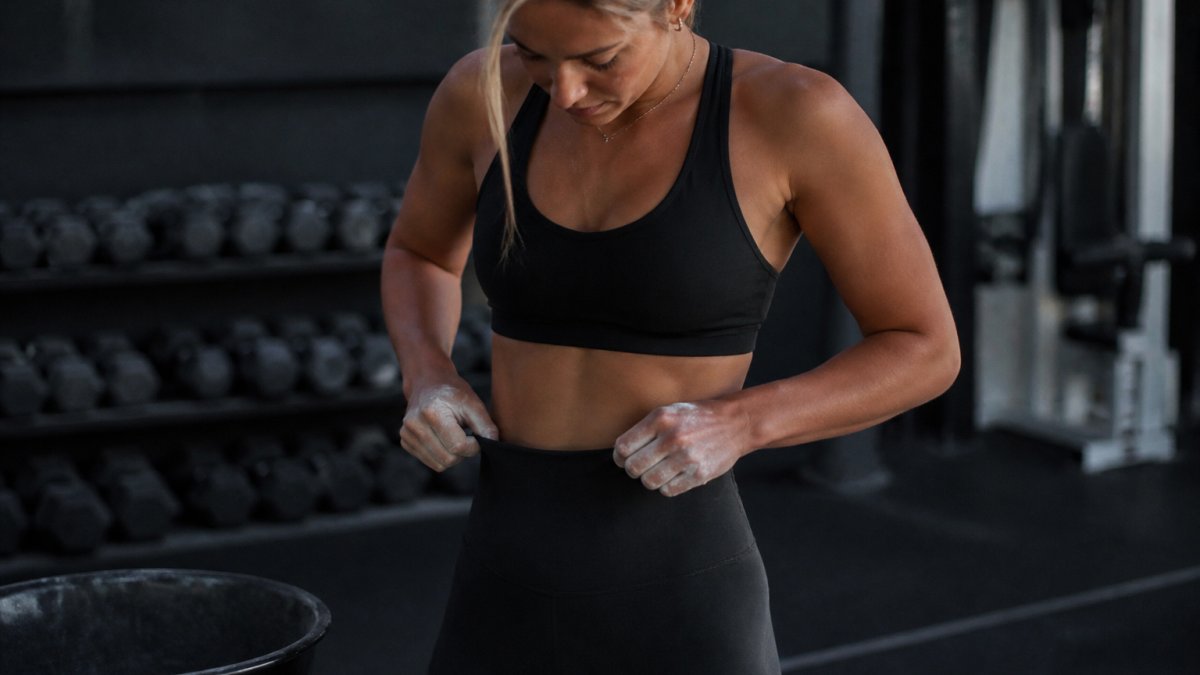
For broader shoulders, size for the chest and shoulder first, then check the waist does not balloon. Heavy cotton often fits closer to true size than stretch blends, which can relax after washing.
Pieces that earn their keep:
- A midweight legging or short with a secure high waist that stays put through squats and hinges. Our Active Leggings use a midweight matte stretch with two side pockets and a high waist, cut to train and live in.
- A loose training short with split sides for unrestricted movement. Our Training Short is a loose-fit nylon-spandex blend at 165 gsm with a drawstring waist.
- A tank that clears the shoulders. Our Heavy Tank uses a seamless shoulder construction to reduce chafing under repeated pressing.
Gym Clothes Care: How to Make Good Gear Last Years
Gym clothes care decides whether good gear lasts two years or ten. Most premature failure comes from heat and detergent, not training: hot washes break down elastane, and fabric softener coats technical fibres so they stop managing moisture.


A simple routine that protects durable gymwear:
- Wash cold, on a gentle cycle, with a mild detergent
- Skip fabric softener entirely
- Turn prints and wordmarks inside out before washing
Our own care guidance follows this pattern: machine wash cold, do not bleach, hang to dry, and do not iron over prints.
Building a Starter Kit by Budget and Training Goal
Building a starter kit by budget means buying in stages, not all at once. Spend first on the pieces that touch the bar and the floor, then add accessories as your training exposes a need. The useful number is cost per use: a $90 piece worn three times a week for two years costs about $1.45 per session, while a $30 piece that thins out in three months costs more per session and gets replaced.
Quiet Unity Active Leggings Ink Blue →
Three budget tiers and what separates them
| Tier | Typical spend per piece | What you get | What to check before buying |
|---|---|---|---|
| Entry | $30-$60 | Basic tops and shorts in lighter fabrics | Stated fabric weight, seam construction, return policy |
| Mid-range | $60-$110 | Midweight stretch, reinforced seams, better fit | Fabric weight in gsm, elastane percentage, care instructions |
| Premium | $110-$180 | Heavy cotton or technical blends, considered cut, longer lifespan | Stated material and weight, warranty, repair or returns policy |
Entry-level gear is not automatically bad value: a $40 midweight short worn twice a week for a year is good value if the seams hold. The problem is entry-level gear that will not state fabric weight, because that is usually where the cost was cut. Mid-range is where most lifters land, and premium earns its price only when material and construction are stated plainly and the piece is cut for training rather than for a photo.
Cost per use, worked through
A simple way to compare two pieces:
- Estimate how many sessions per week you will wear it.
- Multiply by 52 for a year.
- Divide the price by that number.
A $120 legging worn three times a week works out to about $0.77 per session in year one, and less in year two if it lasts. A $45 legging worn the same amount costs about $0.29 per session in year one, but if it thins out in six months and is replaced, the real cost is closer to $0.58 per session, with none of the fit or comfort of the better piece.
By training goal
- Strength lifters (squat, bench, deadlift focus): prioritise a stable shoe and a belt before anything else. Clothing matters less than footing and bracing. Add straps only when grip limits pulling volume.
- Olympic lifters: lifting shoes come first, then wrist wraps for overhead work. Clothing should clear the shoulder and hip without restriction.
- Hypertrophy and general training: favour more tops and bottoms, since volume means more sweat and more washing. Accessories are optional until a specific joint or grip issue appears.
A staged buying order
- First $150-$200: two training tops and one short or legging in midweight fabric. This covers a week of sessions without washing every day.
- Next $60-$110: a second bottom, so you are not laundering the same piece every session.
- Next, by need: a stable shoe if you squat or do Olympic lifts; a belt if you are near your working maximum on squats and deadlifts; straps if grip fails first on pulls; wraps or sleeves if a joint complains under volume.
Buying in this order means every purchase solves a problem you have already met in training, not one a marketing page told you to expect.
What to Ignore When You Buy Quality Gym Gear for Lifters
Ignore anything that sells on aesthetics alone. Logos, seasonal colourways and influencer drops tell you nothing about whether a seam survives a year of pressing, and neither do "premium" claims with no fabric weight or material listed.
Three things to skip:
- Unspecified fabric. If the listing will not state material and weight, assume it is the cheapest option that photographs well.
- Compression claims without fit guidance. Compression only works if the sizing is right, and most listings do not tell you how to size for it.
- Accessory bundles. A belt, straps and wraps sold together are usually budget items priced as a set. Buy each when your training calls for it.
Garment weight, measured in grams per square metre, is the single most useful number on a listing: heavier cloth generally resists thinning and holds shape longer. Ask for it, or look for it stated plainly.
Conclusion
The hard part of buying quality gym gear for lifters is not finding options. It is resisting the urge to buy everything at once and instead building a kit that matches how you actually train.
At Quiet Unity, we build for exactly that approach: minimalist gymwear designed in Australia from considered cloth, made to move from a hard session to the rest of your day without changing. Our Active Leggings, Training Short and Heavy Tank are cut to stay out of the way under load, and shipped worldwide.

Shop Men to start building a kit that lasts.
Frequently Asked Questions
What gym gear do you need for lifting?
Start with the clothing you train in: a top that lets your shoulders move and shorts or leggings with a secure waist. From there, add weightlifting accessories only as your training demands them. A lifting belt helps on heavy squats and deadlifts, straps extend grip on pulls, and knee sleeves add warmth and support. Shoes with a stable base matter more than cushioning. Buy in that order and you avoid spending on gear that sits in the bag.
What should lifters look for in durable gymwear?
Look at fabric weight, stitch quality and how the seams are finished. Midweight cloth with a matte finish resists pilling and holds shape better than thin, shiny fabric. Flatlock or seamless shoulder construction reduces chafing under load. Check the care label too: gear that needs cold washing and hanging to dry will outlast anything that demands heat. Quiet Unity's Active Leggings ($80) use a midweight stretch cloth built for exactly this kind of repeated training.
Are cotton or synthetic fabrics better for lifting?
Both work, but they behave differently. Heavy cotton breathes well and feels substantial, which suits lifting sessions where you are not sweating heavily. Synthetics like the 87% polyester, 13% spandex blend in Quiet Unity's Stringer ($55) dry faster and stretch further, which helps in high-rep or conditioning work. The best fabric for gym clothes depends on your session: cotton for strength days, synthetics for sweatier training.
How should gym clothes fit for weightlifting?
Fit should allow a full range of motion without excess fabric that catches on bars or equipment. Shoulders need room to reach overhead, and waistbands should stay put through squats and hinges. Quiet Unity's leggings are cut true to size and supportive through the body, while the Training Short ($55) has a loose fit with a drawstring. If you are between sizes, size for the shoulders and hips rather than the waist.
How do you make gym clothes last longer?
Wash cold, turn garments inside out and skip the dryer. Heat breaks down elastane and shrinks cotton, which is why Quiet Unity's leggings specify machine wash cold and hang to dry. Use a gentle cycle at 30°C for the Training Short and Heavy Tank. Avoid fabric softener because it coats technical fibres and reduces breathability. Rotate two or three pieces rather than washing the same item after every session, and your gym clothes care routine will add years to the gear.