Guides · · 10 min read
Why Heavy Cotton Gym Shirts Last Longer
Heavy cotton gym shirts last longer because denser fabric resists abrasion, pilling and shape loss. Learn how GSM, construction and care extend wear life.

Table of Contents
- Why Heavy Cotton Gym Shirts Outlast Lightweight Alternatives
- Heavyweight Cotton vs Lightweight Cotton: What the Numbers Show
- Fabric Weight and Construction: How GSM, Yarn Quality and Knit Density Decide Wear Life
- Does Heavy Cotton Shrink? What to Expect After Washing
- How to Wash Cotton Gym Clothes to Extend Their Life
- Durability Trade-Offs and Failure Modes in Heavy Cotton Gym Shirts
- Conclusion: Choosing Heavy Cotton That Earns Its Place in Your Rotation
- Frequently Asked Questions
Last Updated: October 8, 2026
Why Heavy Cotton Gym Shirts Outlast Lightweight Alternatives
A heavy cotton gym shirt lasts longer because it has more fibre to lose before it fails. Thicker yarn, denser knitting and stronger seams mean the fabric takes more washing, friction and stretching before it thins, tears or loses shape. This guide from Quiet Unity breaks down why heavy cotton gym shirts outlast thin ones, how to read a fabric spec before you buy, and how to wash them so the cloth keeps its structure for years rather than months.
Most gym shirts fail in three places: the underarm seam, the collar and the hem. Lightweight cotton hits those points early, a 150gsm tee feels great on day one, then goes see-through at the shoulders and droopy at the neck within a season. Heavier cotton buys you time at every one.
There is a limit to that logic: weight alone does not guarantee wear life. A heavy shirt with poor stitching will split at the seam before a lighter shirt with double-needle construction ever does. The real question is not "how heavy" but "how well made, at what weight."
Heavyweight Cotton vs Lightweight Cotton: What the Numbers Show
Heavyweight cotton is fabric above roughly 200gsm. Lightweight cotton sits closer to 140-160gsm. That gap decides how the shirt behaves over time.
Fabric weight is measured in grams per square metre (GSM). A higher GSM means more cotton packed into the same area of cloth, which means:
- More fibre to absorb abrasion from barbells, benches and mats
- Thicker yarn that resists thinning at stress points
- Better shape retention through repeated washing
- Less transparency when the fabric stretches over your shoulders
A lightweight tee uses fine yarn knitted loosely. It feels cool and dries fast, which suits hot conditions. But loose knitting lets fibres work free faster. Pilling, thinning and small holes show up sooner.
Heavier cotton knits tighter with thicker yarn. The fabric holds its structure, so it does not cling or sag when you sweat. For training, that matters more than most people expect.
Fabric Weight and Construction: How GSM, Yarn Quality and Knit Density Decide Wear Life
GSM is only one number. Three things decide how long a shirt lasts: fabric weight, yarn quality and knit density. Get all three right and the shirt earns its place in your rotation for years.
Fabric weight is measured in grams per square metre (GSM), or sometimes ounces per square yard (oz/yd²). The conversion is roughly 1oz/yd² = 33.9gsm, so a 6.5oz tee sits near 220gsm and a 7.1oz tee near 240gsm. Weight tells you how much cotton is packed into a given area, but not how it is arranged, two 220gsm fabrics can behave very differently depending on the next two factors.
Yarn quality refers to fibre length and how the cotton is combed. Combed cotton removes short fibres, leaving longer strands that spin into stronger yarn and pill less because there are fewer loose ends to tangle. Short fibres slip out of the yarn under abrasion, creating the surface fuzz that becomes pilling.
Knit density is how tightly the loops interlock. A dense knit resists stretching at the neckline and holds its shape after washing; a loose knit relaxes and droops. In a single jersey knit, the most common t-shirt structure, loops form vertical wales and horizontal courses, and higher stitch density means more loops per square centimetre, increasing abrasion resistance and opacity.
Construction details finish the job. Look for double-needle stitching at hems and seams, shoulder-to-shoulder tape across the back of the neck, and side seams that stop the shirt twisting in the wash. A cover-stitched hem, where two needles and a looper create a stretchable edge, outlasts a simple overlocked hem because it spreads stress across more thread.
Why Heavier Cotton May Last Longer Than Lightweight Cotton
Thicker cloth simply has more material to wear through. When a heavy cotton shirt rubs against a bench or barbell, friction removes surface fibres; a lightweight shirt has fewer to spare, so the same wear shows up as thinning much sooner. Heavier cotton also resists stretching at the neck and shoulders, where most shirts lose their shape first.
But weight alone is not a guarantee. A 240gsm shirt with single-needle seams and loose knitting can fail at the underarm before a well-constructed 180gsm shirt. Abrasion resistance comes from fibre density and yarn strength, not mass alone: a heavy fabric made from short, loosely twisted yarn sheds fibres faster than a lighter fabric made from long, tightly spun yarn. So "heavy cotton lasts longer" is true on average but not universally, heavier cotton tends to last longer when the yarn and knit are also good.
How to Assess Durability Before Buying
You cannot wash a shirt 50 times in the shop, but you can read the signs. Use this checklist:
- Check the GSM. Above 200gsm is a good starting point for training, but treat it as one signal among several
- Look for combed or ring-spun cotton, which signals longer, stronger fibres
- Check the seams. Double-needle or cover-stitched seams outlast single stitching
- Feel the knit. Dense fabric springs back when you stretch it
- Look for shoulder-to-shoulder tape across the back of the neck
- Check for side seams. They stop the shirt twisting in the wash
- Confirm pre-shrunk or low-shrinkage finishing
- Check the collar. Twin-stitched neck ribbing resists droop far better than a single-stitched band
Our Unity Classic Oversized Tee uses 6.5oz (around 220gsm) combed cotton with double-needle stitching and a preshrunk finish, heavy enough to take a beating, finished well enough to keep its shape.

Does Heavy Cotton Shrink? What to Expect After Washing
Heavy cotton shrinks less than lightweight cotton when it is preshrunk, but any cotton can move slightly in the first wash. Cotton fibres relax when they first meet hot water; if the mill has already preshrunk the fabric, most of that movement is gone before the shirt reaches you.
What to expect:
- Preshrunk heavy cotton: minimal movement, often under one size
- Unshrunk heavy cotton: can pull in noticeably on the first hot wash
- Cold washing and air drying: keeps shrinkage near zero
- Hot washing and tumble drying: the fastest way to shrink any cotton shirt
If a shirt is labelled low-shrinkage or preshrunk, trust it to hold its size. If not, wash cold and dry flat for the first few cycles.
How to Wash Cotton Gym Clothes to Extend Their Life
Wash heavy cotton gym clothes in cold water, turn them inside out, and skip the dryer. Cold water protects the fibres, inside-out washing reduces surface abrasion, and air drying prevents the heat damage that breaks cotton down fastest.
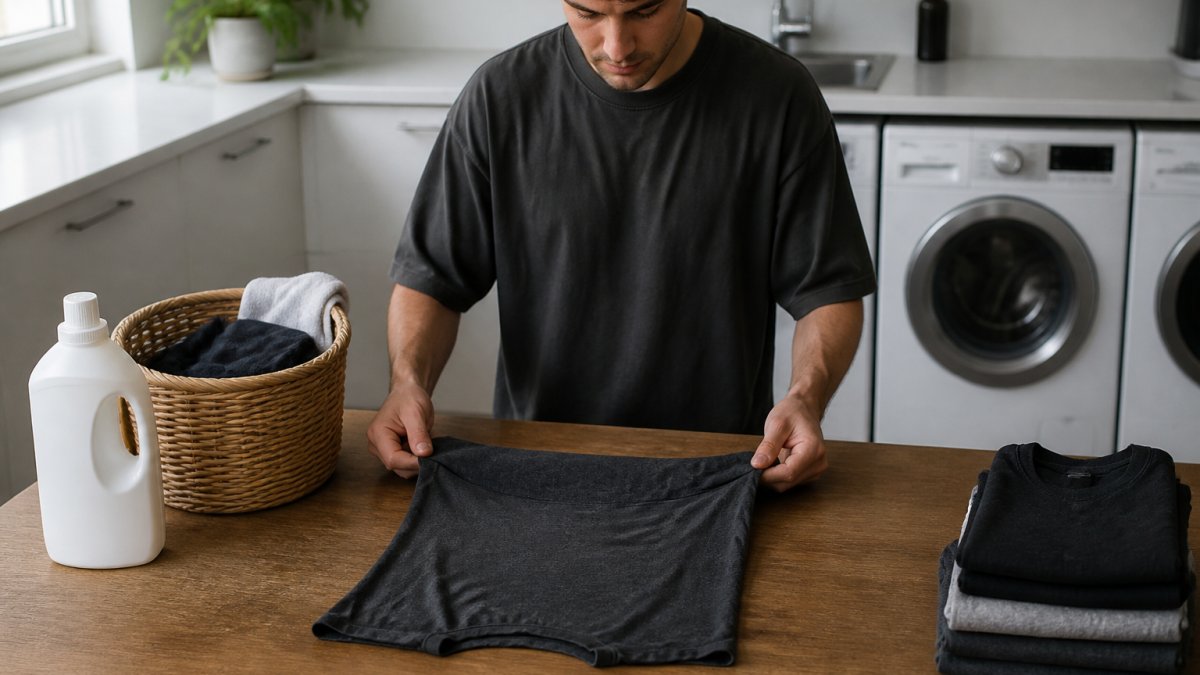
Here is the routine that keeps heavy cotton in shape:
- Turn the shirt inside out. This shields the outer surface from friction against other clothes.
- Wash cold, on a gentle cycle. Heat is the main enemy of cotton fibres.
- Use a mild detergent. Heavy doses of harsh detergent strip the cloth over time.
- Skip the fabric softener. It coats fibres and reduces breathability.
- Air dry flat or on a line. The dryer is where most shrinkage and wear happens.
- Wash with similar colours. Dark dyes can bleed onto lighter cloth.
Durability Trade-Offs and Failure Modes in Heavy Cotton Gym Shirts
Heavy cotton is not the right choice for every session. It absorbs sweat and holds moisture, so it gets heavy when wet; in a hot room or during long cardio, a lighter synthetic fabric dries faster and feels cooler.
Where heavy cotton wins is lifting, short sessions and everyday wear. It resists abrasion, holds its shape and transitions from the gym to the office without looking like gym gear.
Durability is not a single property. A shirt can fail in several distinct ways, and heavy cotton changes the odds on each one.
Pilling happens when short fibres work loose from the yarn and tangle into small balls on the surface. It is driven by fibre length and yarn twist, not fabric weight.
Seam failure is the most common structural failure in gym shirts. Underarm seams take repeated stress from pressing, pulling and overhead movement. Single-needle stitching concentrates that stress on one thread line; double-needle or cover-stitched seams spread it across two.
Collar droop comes from a loose knit or thin ribbing that cannot recover after stretching. Twin-stitched neck ribbing with higher elastane holds its shape far longer than a single-stitched band, and once a collar has relaxed it rarely comes back.
Shrinkage is a fibre-relaxation effect: cotton fibres relax when they first meet hot water. Preshrunk fabric has already been through that process, so movement is minimal, while unshrunk heavy cotton can pull in noticeably on the first hot wash.
Odour retention is a genuine weakness of cotton in repeated-wear scenarios. Cotton fibres absorb sweat and hold moisture, and odour-causing bacteria thrive in damp fabric.
| Failure Mode | Likely Cause | How to Prevent It |
|---|---|---|
| Underarm seam split | Single-needle stitching, heavy fabric load | Choose double-needle or cover-stitched seams |
| Collar droop | Loose knit, thin ribbing | Look for twin-stitched neck ribbing |
| Pilling | Short, uncombed fibres | Choose combed, ring-spun cotton |
| Shrinkage | No preshrunk finish | Wash cold, air dry |
| Odour build-up | Damp storage, moisture retention | Dry fully before storing |
| Thinning at shoulders | Low fibre density, loose knit | Choose denser knit at 200gsm+ |
A common pattern among regular trainers is that heavy cotton shirts outlast lightweight ones at the seams and shoulders, but not necessarily at the collar or in odour control.
Conclusion: Choosing Heavy Cotton That Earns Its Place in Your Rotation
The challenge with heavy cotton is finding a shirt that is genuinely heavy and genuinely well made. Plenty of labels claim "premium" and deliver thin cloth with weak seams. Check the GSM, the yarn and the stitching before you buy, then wash cold and air dry to protect what you paid for.
At Quiet Unity, we build our gymwear around better cloth and considered details. Our heavyweight tees use combed cotton, double-needle stitching and preshrunk finishing, designed to move from training to daily wear without falling apart. Shop Men and find a shirt that stays out of the way while you put the work in.
Frequently Asked Questions
How long does a heavy cotton gym shirt last?
Wear life depends on fabric weight, construction quality and how you wash it. Heavier cotton with double-needle stitching and preshrunk finishing typically holds shape and colour through many more wash cycles than lightweight alternatives. The denser knit resists abrasion and pilling, which are the main reasons gym shirts fail early. Proper laundering, cold water and air drying, extends that further.
Does heavy cotton shrink or lose its shape?
Preshrunk heavy cotton garments shrink far less than untreated cotton. Look for labels that state preshrunk or low-shrinkage performance. Washing in cold water and avoiding high-heat drying keeps shrinkage minimal and protects the fabric's structure. Even without preshrinking, heavier knits tend to hold their shape better because the denser yarn structure resists distortion during washing and wearing.
What material is best for gym shirts?
It depends on the training context. Synthetic fabrics dry faster and wick moisture away from the skin, which suits high-sweat cardio. Heavy cotton absorbs perspiration, feels substantial against the skin and resists odour retention better than many synthetics. For lifting, short sessions or wear that transitions to daily life, heavy cotton offers comfort and durability that lightweight synthetics struggle to match over time.
How should you wash a heavy cotton gym shirt to make it last longer?
Turn the shirt inside out, wash in cold water on a gentle cycle and avoid fabric softener, which coats fibres and reduces breathability. Air dry where possible. If using a dryer, choose low heat and remove the shirt while slightly damp. These habits reduce shrinkage, protect seam strength and slow the pilling that shortens a shirt's useful life.