Guides · · 10 min read
Benefits of Logo-Free Workout Clothing
Explore the benefits of logo-free workout clothing, from better focus to versatility. Learn how to choose durable gymwear that lasts.

Table of Contents
- Why Logo-Free Workout Clothing Is Gaining Ground
- How to Choose Durable Gymwear
- The Benefits of Heavy Cotton Gym Wear
- Versatile Gym to Street Clothing: One Outfit, Two Contexts
- Performance Features That Matter in Logo-Free Gear
- Cost-Benefit Analysis: Unbranded vs Branded Workout Clothing
- Frequently Asked Questions
Last Updated: October 4, 2026
Why Logo-Free Workout Clothing Is Gaining Ground
The benefits of a logo free workout come down to one idea: your gear should support the training, not advertise it. At Quiet Unity, we design in Melbourne for people who would rather their effort speak than a chest logo. That shift is real, and it is changing how lifters and everyday athletes buy.
Logo-free workout clothing is athletic apparel with no visible external branding, so the garment's cut, cloth and construction carry the value instead of a printed name. Nothing on the outside competes for attention.
Three forces are driving the change.
- Cost discipline. You are no longer paying a premium for someone else's advertising space.
- Versatility. A plain piece moves from a squat rack to a coffee meeting without looking like a billboard.
- Longevity. Logos date. Cuts and cloth do not.
That last point matters more than most buyers realise.
How to Choose Durable Gymwear
Durability is decided by fabric weight and seam construction, not by price or label. Get those two right and a garment survives years of washing and heavy training.
Most people buy on feel and fit, then wonder why a piece pills or splits within a season. The failure almost always traces back to construction. Here is how we would assess any pair of training shorts or a tee before committing.
Fabric Weight and Construction
Fabric weight is measured in grams per square metre (gsm), and it is the single best predictor of how a garment wears. Heavier knits resist thinning, hold their shape and handle repeated washing far better than light ones.
For training gear, a midweight to heavyweight knit is the safer bet. The Quiet Unity Heavy Sweat Short, for example, uses a 345 gsm brushed fleece blend of 53% polyester, 42% cotton and 5% other fibres. That weight gives it structure and heat retention without turning stiff.
Check the label before you buy. If a brand will not tell you the gsm, that is usually a sign the number is not flattering.
Stitching and Seam Quality
Seams fail before fabric does. Reinforced stitching, flatlock or overlocked joins, and clean hems at stress points are what keep a garment together through repeated loading.
Run your eye along the inner thigh and shoulder seams. Look for even, dense stitching with no loose threads. Raw-edge detailing, like the straight hem on the Heavy Sweat Short, is a deliberate design choice, but it should sit on a well-finished edge, not a fraying one.
- Check the gsm and fibre blend on the care label
- Inspect inner-thigh and shoulder seams for density
- Confirm stress points are reinforced, not single-stitched
- Test the waistband elastic for snap-back
- Look for flatlock joins where fabric meets skin
That checklist takes two minutes and saves a wasted purchase.
The Benefits of Heavy Cotton Gym Wear
Heavy cotton gym wear holds its shape, resists pilling and regulates temperature better than thin synthetics, which is why it lasts longer and feels more substantial in the hand. It is the opposite of disposable.
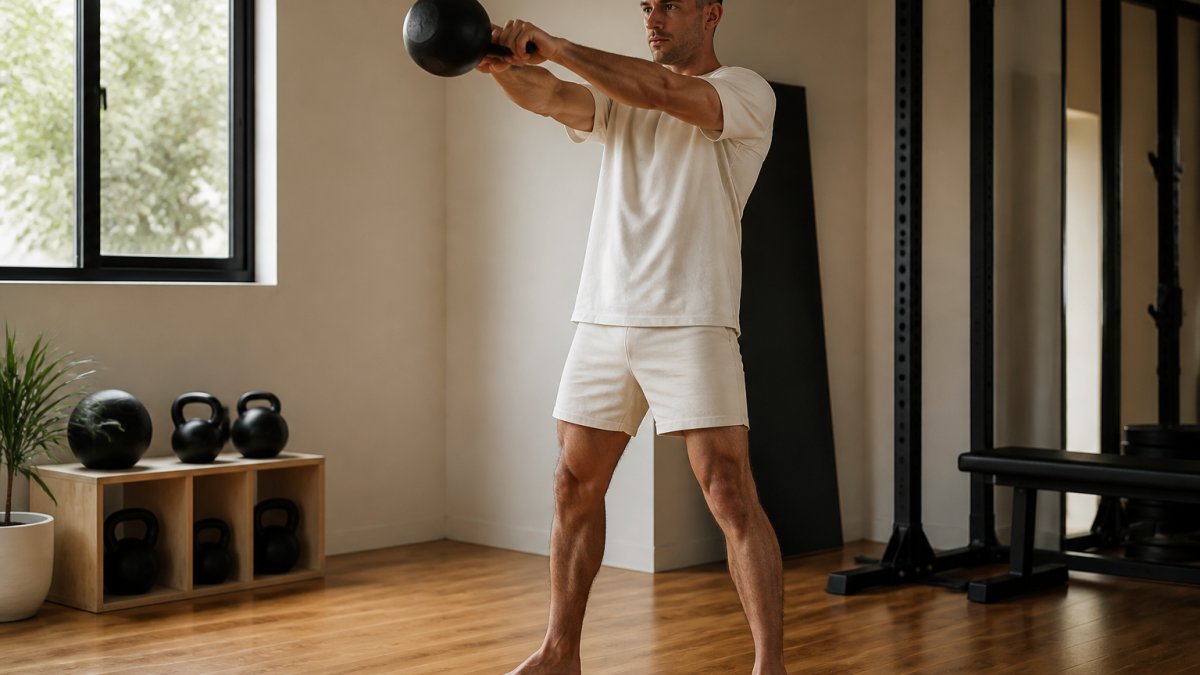
The mechanism is simple. A heavier knit uses longer staple fibres and a denser loop structure, so individual fibres are less likely to work loose and pill.
Heavy Cotton vs Synthetics: The Honest Trade-Off
Heavy cotton is not universally better. It is better for specific jobs, and worse for others. Here is the honest comparison.
| Property | Heavy Cotton | Technical Synthetics |
|---|---|---|
| Moisture handling | Absorbs sweat, feels damp | Wicks sweat to surface, dries fast |
| Drying time | Slow, especially in humid conditions | Fast, often under an hour |
| Odour resistance | Moderate; natural fibres resist bacteria better than untreated polyester | Depends on finish; untreated synthetics hold odour |
| Durability | High if gsm is adequate; resists pilling | High if knit is dense; cheap versions pill quickly |
| Temperature feel | Warm, substantial, good for cooler sessions | Cool, light, good for high-sweat sessions |
| Cost per wear | Low if the piece lasts years | Variable; cheap synthetics often replaced within a season |
A heavier knit also drapes better. It sits on the body instead of clinging, which matters when you are moving between exercises. The trade-off is drying time. Heavy cotton takes longer to dry than a light synthetic, so if you train twice a day, plan your laundry accordingly.
Where Heavy Cotton Wins
Where heavy cotton shines is in the everyday overlap. A substantial tee reads as clothing, not costume, which is exactly the point of the minimalist approach. It works for a morning lift, a walk to the shops and a casual lunch without a change. That versatility is hard to replicate with a thin synthetic that looks and feels like gym kit.
Heavy cotton also ages well. A well-made piece develops a softness over time without losing structure, which is the opposite of how cheap knits behave. They start soft and end shapeless. If you are building a small rotation of logo-free staples, heavy cotton is the backbone, and synthetics are the specialists you add for high-sweat sessions.
Versatile Gym to Street Clothing: One Outfit, Two Contexts
Versatile gym to street clothing works when a piece has a clean silhouette and no loud branding, so it reads as normal clothing outside the gym. That is the whole test.
Quiet Unity Heavy Sweat Short →
The Quiet Unity Contour Tank shows how this plays out. It is a midweight nylon-blend knit at 220 gsm with a clean H-line silhouette, seamless shoulders and subtle contrast topstitching.
For men, the Quarter Zip Romper does the same job in a different register.
The rule for a logo free workout wardrobe is simple: if a piece needs a gym to make sense, it is not versatile.
Performance Features That Matter in Logo-Free Gear
Moisture-wicking, breathability, four-way stretch and anti-odour finishes matter more in logo-free gear because there is no brand promise to fall back on. The cloth has to do the work, and you have to be able to read the cloth yourself.
Here is what to prioritise, what each feature actually does at the fibre level, and how to test it before you commit.
| Feature | What It Does | How to Test It | Why It Matters |
|---|---|---|---|
| Moisture-wicking | Capillary action pulls sweat along the fibre to the surface, where it evaporates | Dampen a corner and time how long it takes to feel dry to the touch | Keeps you dry through high-sweat sessions and reduces chill after training |
| Breathability | Air and vapour pass through the knit structure, letting heat escape | Hold the fabric to a light and look for visible airflow through the knit | Regulates temperature as intensity climbs |
| Four-way stretch | Elastane or a mechanical knit allows stretch on both the warp and weft | Pull the fabric diagonally, not just side to side | Protects range of motion in deep lifts and overhead work |
| Compression | Graduated pressure supports venous return and reduces muscle oscillation | Check the fit guide; compression should feel firm, not restrictive | Aids recovery and reduces fatigue during repeated effort |
| Seamless construction | Circular knitting removes side seams entirely | Turn the garment inside out and look for bulky joins | Cuts chafing on long sessions |
| Anti-odour finish | Silver-ion or zinc-based treatments limit bacterial growth | Check the care label; some finishes wash out after 30-50 cycles | Keeps gear wearable between washes |
Compression is the one people misunderstand. It supports muscle recovery and reduces fatigue during repeated effort, but it is not a substitute for a proper warm-up, and it does not make up for a poor fit. Pair it with the right fabric weight and you get a garment that works as hard as you do.
The Quiet Luxury Angle
There is a reason logo-free gear is surging right now, and it is not just aesthetics. The broader shift toward what the fashion press calls quiet luxury has reached activewear: buyers are choosing pieces that signal quality through cut, cloth and finish rather than through a visible mark. In a gym, that reads as confidence.
This is where logo-free gear pulls ahead of branded equivalents. A loud logo locks a piece into one context. A clean silhouette moves across contexts, so a smaller wardrobe covers more of your week. That is a performance feature in its own right, even if it never appears on a spec sheet.
Sustainability as a Performance Choice
Most performance guides stop at moisture management. The more interesting question is what happens to the garment after 200 washes. Logo-free, well-made staples tend to stay in rotation longer because they do not date, and longer rotation means fewer replacements and less textile waste. A common pattern among people who switch to unbranded gear is that they buy less often, not more, because nothing in the drawer feels obsolete.
That is not a marketing claim, it is a direct consequence of removing the logo. Logos date. Cuts and cloth do not. When you strip the branding, the only thing left to judge is whether the garment still works, and a well-constructed piece keeps working for years.
Cost-Benefit Analysis: Unbranded vs Branded Workout Clothing
Unbranded gear usually costs less per wear over its life because you are not funding marketing, and the garment often lasts longer. The maths favours substance over spectacle.
Think about it as cost per wear. A cheaper branded piece that pills after a season and gets replaced twice costs more than one well-made plain piece worn for years. Quiet Unity pieces sit in the premium range, from $51 for the Contour Tank to $64 for the Quarter Zip Romper, and the justification is the cloth and construction, not a logo.
Two angles most guides skip:
- Sustainability. Buying fewer, better-made pieces reduces turnover and textile waste. A quiet wardrobe is a lower-waste wardrobe.
- Styling range. Plain pieces mix with anything you already own, so a small rotation covers more contexts than a stack of loud branded items.
The unbranded route asks more of you upfront. It rewards you later.
Frequently Asked Questions
Does wearing logo-free clothing improve workout focus?
Many athletes find that removing visible branding reduces mental clutter and helps them concentrate on their training rather than their appearance. Without logos, there's less distraction and a greater sense of personal discipline. This aligns with the minimalist ethos of letting actions speak louder than labels.
Is logo-free activewear more versatile for everyday wear?
Yes, because it lacks conspicuous branding, logo-free pieces transition seamlessly from the gym to casual or professional settings. A plain heavy cotton tee or shorts can be worn for a workout and then to a café or office without looking out of place. This versatility increases the value of each garment.
What are the benefits of choosing high-quality unbranded activewear?
High-quality unbranded activewear often uses superior fabrics and construction, offering better durability, comfort, and fit than cheaper branded alternatives. Without paying for logos, you invest more in the garment itself. For example, heavy cotton items resist pilling and hold their shape after many washes, providing long-term value.
How does minimalist design impact the durability of gym clothing?
Minimalist design typically avoids unnecessary seams, prints, and embellishments that can weaken fabric over time. This means fewer points of failure, so the garment lasts longer. Additionally, minimalist brands often prioritise quality materials, further enhancing durability.
The real challenge with logo-free gear is trusting your own judgement on cloth and construction instead of a brand name. That is where Quiet Unity comes in. We design in Melbourne and build from heavy cotton and considered knits, so every piece stays out of the way during training and still looks right on the street. Start with the Heavy Sweat Short or the Contour Tank and see how one clean, durable piece changes your rotation. Shop Men and build a wardrobe that works as hard as you do.