Guides · · 10 min read
How to Style Minimalist Streetwear Outfits: 2026 Guide
Learn how to style minimalist streetwear outfits with a step-by-step method, fit guidance, and outfit formulas. Build a wardrobe that works harder.

Table of Contents
- The 5-Step Method for Styling Minimalist Streetwear Outfits
- Minimalist Streetwear Outfit Ideas for Every Setting
- Minimalist Wardrobe Essentials for Men: The Non-Negotiables
- How to Build a Minimalist Wardrobe That Actually Works
- Streetwear Fit Guide: Getting the Silhouette Right
- A Colour Palette Beyond Basic Neutrals
- Common Mistakes That Undermine Minimalist Streetwear
- Frequently Asked Questions
Last Updated: October 18, 2026
The 5-Step Method for Styling Minimalist Streetwear Outfits
Minimalist streetwear is built on plain, well-made pieces in a tight colour range, where fit and fabric do the talking. At Quiet Unity, we design heavy cotton basics for exactly this reason.
Below is the five-step method we use to build any outfit. Work through it in order.
Step 1: Choose Your Base Silhouette
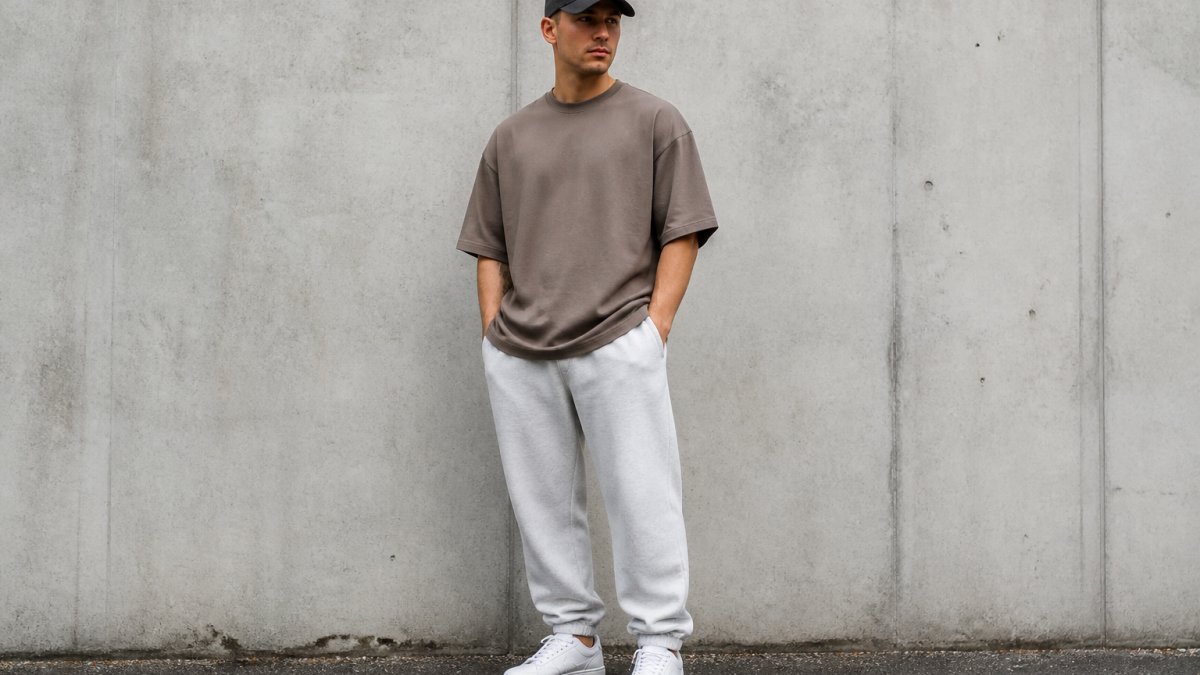
Pick one shape for the top and one for the bottom. A boxy top with a tapered leg reads clean; a relaxed top with a wide leg reads softer.
Step 2: Lock In a Three-Colour Palette
Choose three colours and stick to them. Black, white and grey is the easiest start; beige, olive green and charcoal works just as well.
Three is the limit, a fourth colour usually breaks the calm look.
Step 3: Add Texture, Not Logos
This is where most people get it wrong. They reach for a graphic when the outfit feels flat.
Texture does the job better. A heavyweight cotton tee against a brushed fleece hoodie gives contrast without noise. Understated graphics are fine, but one per outfit at most.
Step 4: Balance Proportions
If the top is oversized, keep the bottom closer to the leg. If the pants are wide, keep the top more fitted.
The rule is simple: one loose piece, one closer piece. Two loose pieces only work with real height or a cropped top.
Step 5: Finish with One Statement Piece
One piece gets to be the loudest thing you wear: a chunky sneaker, a structured jacket, or a bag.
Just one. Two statement pieces fight each other and the whole look collapses.
Minimalist Streetwear Outfit Ideas for Every Setting
Most minimalist streetwear advice stops at inspiration galleries.
1. Training to coffee (mild weather, 15-22°C) Heavyweight oversized tee in white or black, tapered joggers in charcoal, plain white low-profile sneakers.

**2.
3. Weekend city (cool weather, 8-15°C) Black hoodie, grey wide-leg pants, one chunky sneaker.
**4.
5. Layered winter (below 8°C) Long-sleeve tee, hoodie, structured jacket, dark jeans, boots.
**6.
7. Travel day (long transit, variable temperature) Oversized tee as the base, hoodie as a mid-layer, tapered joggers with stretch, slip-on sneakers.
A note on seasons: the same formula shifts by swapping fabric weight, not the whole outfit.
Minimalist Wardrobe Essentials for Men: The Non-Negotiables
A working minimalist wardrobe for men comes down to a short list of versatile pieces. Buy these first, and most outfits build themselves.
- Two heavyweight tees in white and black
- One oversized tee for relaxed days
- One crew sweatshirt in a neutral tone
- One hoodie in black or charcoal
- One pair of tapered joggers
- One pair of dark jeans
- One pair of clean sneakers
- One structured jacket
That is eight pieces. From those you can make well over a dozen outfits.
How to Build a Minimalist Wardrobe That Actually Works
Building a minimalist wardrobe means buying fewer, better pieces that all work together. Most people fail because they buy one item at a time with no plan.
Try this instead:
- Pick your three colours and write them down.
- List the eight essentials above.
- Check what you already own against the list.
- Fill only the gaps, one piece per pay cycle.
- Before buying anything new, ask if it works with three existing pieces.
That last question kills most bad purchases. If a piece only works with one outfit, it does not belong in a capsule wardrobe.
Cost per wear matters more than sticker price. A $92 hoodie worn twice a week for two years costs under a dollar a wear; a cheap one that pills after six months costs far more.
Streetwear Fit Guide: Getting the Silhouette Right
Fit is the difference between minimalist streetwear and clothes that look like they do not belong to you. Most fit advice stops at "size up for oversized", which is not a method. Here are the two measurements that matter, a sizing decision tree, and the body-type trade-offs.
The Two Measurements That Decide Everything
Before you buy any top, check shoulder width and chest. Shoulder width is measured seam to seam across the back of a garment you already own and like; chest is measured pit to pit and doubled.
For bottoms, the two numbers are waist and rise. Rise, the distance from the crotch seam to the top of the waistband, decides whether a relaxed pant sits on your hip or your natural waist, changing the silhouette more than leg width does.
Oversized vs Relaxed: What's the Difference?
Oversized means deliberately larger than your true size, with a dropped shoulder and a boxy body. Relaxed means cut with room to move but still following your shape.
Oversized is a style choice; relaxed is a comfort choice. The two behave differently when you layer: an oversized top under a structured jacket bunches at the shoulder, while a relaxed top sits flat. If you layer often, buy relaxed; if you wear the top on its own, oversized gives you more silhouette.
Sizing Decision Tree
Work through these in order:
- Does the chest fit without pulling across the back? If yes, go to step 2. If no, size up.
- Do the shoulder seams sit where you want them? For a relaxed fit, the seam should sit at or just past your natural shoulder. For oversized, it should drop 2-5 cm past it.
- Does the hem sit where you want it? A boxy tee should hit mid-fly or just below the waistband; a longer hem reads as a tunic and throws off the one-loose-one-close rule.
- Can you raise your arms without the hem lifting past your waistband? If not, the body is too short for layering.
If a garment fails step 1 or step 4, no amount of styling fixes it. Return it.
Sizing for Broad Shoulders and Athletic Builds
Broad shoulders are the most common fit problem we hear about. Check shoulder width and chest before you buy, a dropped-shoulder design solves the problem better than sizing up a set-in shoulder.
If your chest fits but the shoulders pull, size up and accept a slightly looser body, then keep the bottom closer to the leg so the proportion rule still holds. A dropped-shoulder cut, like our oversized tees, gives you room across the back without the tightness that comes from a set-in seam.
Sizing for Narrower Frames and Taller or Shorter Builds
On a narrower frame, oversized can tip into swamping. The lever is hem length, not chest width: a boxy tee that ends at the waistband keeps the look intentional, while a long oversized tee reads as a dress.
Taller builds often find standard oversized tees wide enough but too short. Check the body length against a tee you own; if it is more than 3 cm shorter, size up or look for a tall cut.
The Proportion Rule, Restated Precisely
One loose piece, one closer piece. "Loose" means the garment stands away from the body by roughly a hand's width at the chest or thigh. "Close" means it follows the body within a couple of centimetres. Two loose pieces can work, but only with real height or a cropped top, and if you are unsure, assume they will not.
A Colour Palette Beyond Basic Neutrals
Black, white and grey will carry you a long way. But a palette built only on those three can start to feel flat.
Add one or two muted tones as your base expands:
- Beige warms up black and white
- Olive green pairs well with charcoal and cream
- Brown works as a softer alternative to black
- Muted navy reads smarter than bright blue
Keep the same three-colour rule per outfit. The palette grows across your wardrobe, not within a single look.
Common Mistakes That Undermine Minimalist Streetwear
The most common mistake is treating minimal as plain. Minimalist fashion still needs contrast, texture and a clear silhouette.
Other mistakes we see often:
- Too many colours. Four or more breaks the calm look.
- Logos doing the work. A big graphic hides a bad fit. Fix the fit instead.
- Two loose pieces. Without height or a crop, this reads sloppy.
- Thin fabric. Lightweight cotton loses its shape and drape fast.
- Buying trends. Trends date quickly. Simple cuts and neutral colours do not.
Quality over quantity is the whole point. One well-cut heavyweight tee beats five thin ones.
Our Unity Classic Oversized Tee is built on 6.5 oz combed cotton with a boxy fit and dropped shoulder, which is the shape most of the outfits above rely on. If you want a lighter layer for the cooler months, the Unity Relax Crew uses a mid-weight 9.4 oz fleece with a relaxed fit.

Most wardrobes fail on fit and fabric, not on taste. Fix those two and styling gets easy.
Get started with Quiet Unity and build a wardrobe where every piece earns its place.
Frequently Asked Questions
How should minimalist streetwear fit?
Minimalist streetwear works best when the fit is intentional, not accidental. Tops should sit on the shoulder seam or drop slightly for an oversized look, with sleeves ending mid-bicep. Bottoms should taper cleanly without pooling at the ankle. The key is balance: if your top is oversized, keep pants relaxed but not baggy; if your top is fitted, you can go wider on the bottom. Always check the garment's stated fit (oversized, relaxed, regular) before buying, and size up only when the cut is explicitly designed for layering.
What are the essentials for a minimalist streetwear wardrobe?
Start with five core pieces: a heavyweight oversized tee in white or black, a mid-weight crewneck sweatshirt in grey or beige, a pullover hoodie in a dark neutral, relaxed-fit joggers or straight-leg jeans, and a clean low-profile sneaker. Add a lightweight jacket for layering. Stick to neutral colors like black, white, grey, beige, and olive green so everything mixes together. Quality matters more than quantity: heavyweight cotton (6.5 oz and up) holds its shape and drapes better than thin fast-fashion fabric, which means fewer replacements over time.
Can you wear oversized pieces in a minimalist outfit?
Yes, but proportion control is everything. Wear one oversized piece at a time: an oversized tee with relaxed joggers, or a boxy hoodie with straight-leg jeans. Avoid pairing two extremely oversized items unless the fabric is heavy enough to hold structure. Dropped shoulders and boxy silhouettes look intentional when the hem sits around mid-hip and the sleeves are not past your knuckles. Keep colors muted and graphics minimal so the silhouette does the talking, not the print.
How can you create different outfits from a small streetwear wardrobe?
Build around a tight color palette and let layering do the work. Five tops, three bottoms, and two pairs of shoes can produce over 20 distinct outfits when every piece shares the same neutral tones. Use outfit formulas: tee + joggers + sneakers for training days, crewneck + jeans + jacket for casual settings, hoodie + straight-leg pants + clean sneakers for weekends. Swap one layer at a time rather than changing the whole outfit. This approach keeps your cost per wear low and your decisions fast.