Guides · · 11 min read
Non Restrictive Gym Shirts Review: What to Buy in 2026
A practical non restrictive gym shirts review covering fit, fabric and durability, plus what to check before you buy. Find a shirt that moves with you.

Table of Contents
- Non Restrictive Gym Shirts Review: What Actually Matters
- How to Judge a Non Restrictive Gym Shirt
- Why Relaxed Fit Gym Shirts Beat Compression Cuts for Lifting
- Breathable Gym Shirts: Fabric Performance Compared
- Cotton Gym Shirts: The Case for Heavy Cotton Over Synthetics
- Durable Gymwear: How to Spot a Shirt That Survives
- Fit, Sizing and Body Type: Getting the Cut Right
- Common Buying Mistakes to Avoid
- Frequently Asked Questions
Last Updated: October 17, 2026
Non Restrictive Gym Shirts Review: What Actually Matters
Most gym shirts fail at the shoulders: fine on the rack, a straitjacket the moment you press overhead.
Non restrictive gym shirts are cut with extra room through the chest, shoulders and arms so the fabric follows your movement instead of fighting it.
"Stretchy" and "non restrictive" are not synonyms. A tight compression top can stretch in every direction and still limit your range of motion, because the restriction comes from the cut, not the fabric.
How to Judge a Non Restrictive Gym Shirt
Judge a gym shirt by four things: shoulder mobility, hem behaviour, fabric recovery, and seam placement. A shirt that passes one can fail another, so test all four.
The four tests that separate good from restrictive
- The overhead reach. Raise both arms straight up. The hem should stay near your waistband and the fabric across your back should not pull tight. If it does, size up or choose a different cut.
- The horizontal reach. Cross your arms or reach across your body. Feel the fabric at the shoulder blade. Any pinch means the armhole is too high or too small.
- The squat and hinge. Bend at the hips as if setting up for a deadlift. Check that the shirt does not ride up or bunch at the lower back.
- The wash test. After one wash and dry, does the shirt return to its original shape, or has the neckline and hem stretched out? Recovery tells you whether it will last.
A common mistake is testing only in a relaxed stance, restriction rarely shows up standing still. Move through the ranges your training actually uses before you decide.
Why Relaxed Fit Gym Shirts Beat Compression Cuts for Lifting
Relaxed fit gym shirts beat compression cuts for most lifting because they let the shoulder joint move without fabric resistance.
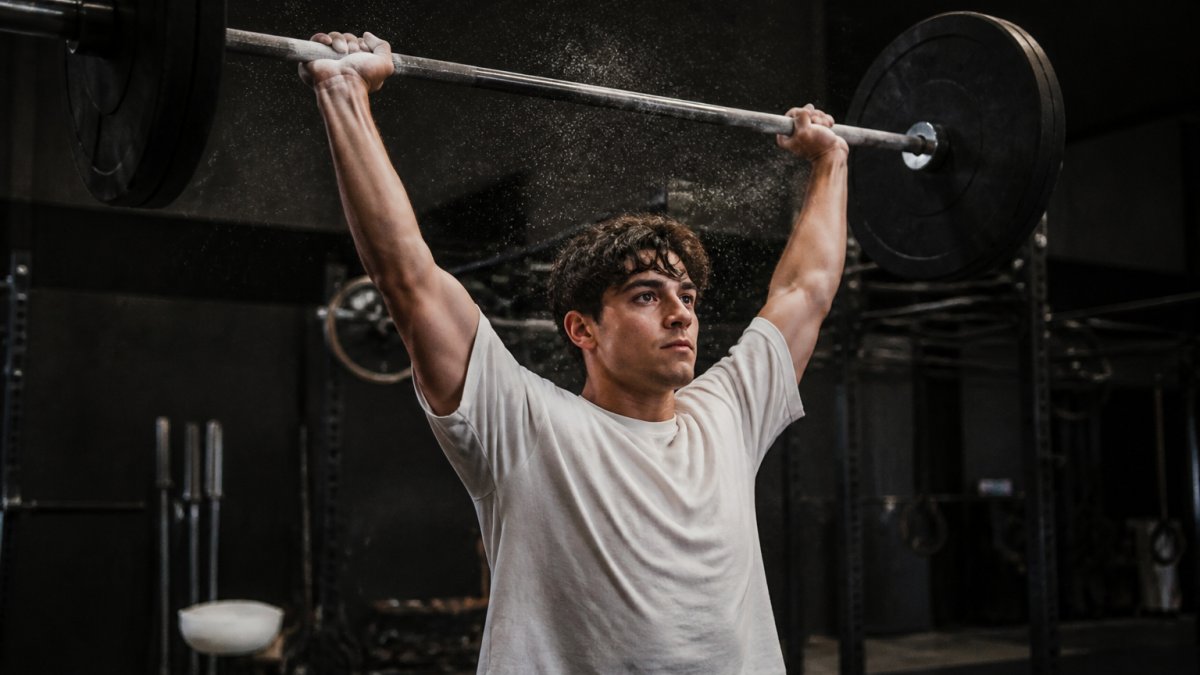
The case for compression centres on support and blood flow, real for some athletes, not everyone in every session.
Relaxed cuts also work outside the gym: a plain, well-cut relaxed shirt moves from training to a coffee or a commute without looking like you forgot to change. That versatility is why we build Quiet Unity pieces around roomier cuts in heavy cotton rather than skin-tight performance knits.
Breathable Gym Shirts: Fabric Performance Compared
Breathable gym shirts manage heat and sweat two ways: how quickly the fabric moves moisture away from skin, and how much air moves through the weave. Most reviews stop at "synthetics dry faster, cotton feels cooler." Here are the measurements that actually separate one non restrictive gym shirt from another.
What to measure, and how to measure it at home
You do not need a lab. Five simple checks, run the same way on every shirt, tell you more than any marketing claim:
- Drying time. Wet a 10 cm × 10 cm patch of fabric, squeeze out excess water, and time how long it takes to feel dry to the touch at room temperature. Record it in minutes. Synthetics typically dry in a fraction of the time cotton takes; the exact gap matters more than the direction.
- Breathability. Hold a single layer of fabric over the mouth of a glass of hot water and time how long before condensation appears on a cool plate held above it. Faster condensation means more air moves through the weave.
- Stretch recovery. Stretch a section of the fabric to roughly 20% beyond its resting length, hold for 10 seconds, release, and measure how far it returns. Good cloth springs back; poor cloth stays stretched.
- Odour retention. Wear the shirt for one training session, let it air dry, and assess smell before washing. Repeat after washing. Natural fibres usually hold less odour over time than synthetics.
- Fabric weight. Weigh a known area of fabric, or compare how the shirt feels against a reference piece you already trust. Heavier knits drape away from the skin; lighter knits cling when damp, and clinging is a form of restriction.
Run all five on the same day, in the same conditions, and write the results down. A shortlist scored on the same criteria beats subjective comfort claims.
Fabric types compared on the things that matter
| Fabric type | Drying speed | Odour retention | Feel | Best for |
|---|---|---|---|---|
| Polyester performance knit | Fast | Higher over time | Slick, cool | High-sweat cardio |
| Cotton | Slower | Low | Soft, dry | Lifting, everyday wear |
| Cotton-synthetic blend | Medium | Medium | Soft with stretch | Mixed training |
| Merino wool | Medium | Very low | Warm, soft | Cooler sessions, travel |
The trade-off is straightforward. If you sweat heavily and train in heat, a quick-drying synthetic has an edge on moisture management. If you lift in a normal gym and want one shirt that works all day, cotton's comfort and low odour retention usually win.
A consistent shortlist method
Score each candidate on the same five measures plus three fit checks from the next section: overhead reach, horizontal reach, and the squat and hinge.
Look for breathable fabric that feels substantial rather than paper-thin. Thin knits breathe well but cling when damp, and clinging is a form of restriction. A slightly heavier weave with a looser cut often feels freer than a light, tight one.
Cotton Gym Shirts: The Case for Heavy Cotton Over Synthetics
Cotton gym shirts make sense when comfort, odour control and versatility matter more than drying speed. Heavy cotton holds its shape, drapes instead of clinging, and softens with washing rather than pilling.
A heavier knit has enough body to hang away from the skin, so it does not stick when you sweat, that gap keeps a shirt feeling non restrictive through a full session.
Durability is the other argument.
Where cotton loses, and how to work around it
Cotton dries more slowly than synthetics, and that is its real weakness. In a hot, humid session or a long cardio block, a soaked cotton shirt stays wet longer.
Work around it in three ways:
Shop Men →
- Keep cotton for lifting and general training, and reserve quick-dry synthetics for heavy sweat sessions.
- Choose a looser cut so damp fabric sits away from skin rather than clinging.
- Rotate shirts and wash promptly so odour does not set into the fibres.
For most lifters in a normal gym, those adjustments close the gap. Cotton's comfort and low odour retention are worth the slower dry time.
Durable Gymwear: How to Spot a Shirt That Survives
Durable gymwear shows itself in the details before it shows in the wash.
Start with the seams at the shoulder and armhole, where a gym shirt takes the most stress.
Then test recovery. Stretch a section of the fabric and let go. Good cloth springs back to shape; poor cloth stays stretched.
Finally, look at the neckline and hem. Ribbed collars and properly finished hems resist the stretching that turns a good shirt into a shapeless one.
Fit, Sizing and Body Type: Getting the Cut Right
Getting the cut right means matching the shirt's shoulder and chest room to your frame, then sizing up where you are between sizes. Fit is the difference between a shirt that moves with you and one that fights you. Here is how each part should fit.
Fit by body region
Check each region separately, because a shirt can fit well in one place and fail in another:
- Shoulders. The shoulder seam should sit at or just past the edge of your shoulder bone, not pull inwards. A dropped shoulder seam gives more room through the upper back and is the single most useful feature for broad-shouldered lifters.
- Chest. You should be able to pinch roughly a hand's width of fabric at the chest without the shirt pulling across the back. If the fabric tightens when you take a deep breath, the chest cut is too narrow.
- Sleeves. Short sleeves should end mid-bicep and leave room to flex without the hem digging in. If the sleeve grips your arm when you curl, it will restrict pressing and pulling too.
Size-chart accuracy and the sizing-up trade-off
Size charts vary in accuracy between brands, so treat the chart as a starting point and your measurements as the real guide.
Sizing up is usually right between two sizes, but a larger shirt can feel loose through the torso and long in the sleeve.
| Body type | Common fit issue | What to look for |
|---|---|---|
| Broad shoulders | Tight across upper back | Dropped shoulder seam, roomier armhole |
| Fuller chest | Pulling at the buttons or chest | Relaxed chest cut, size up |
| Long torso | Hem rides up overhead | Longer body length |
| Slim frame | Shirt looks boxy | Trim relaxed cut, not oversized |
If you are unsure, check the brand's size guide and, where offered, its returns policy before ordering.
Common Buying Mistakes to Avoid
The most common buying mistake is treating stretch as a substitute for a good cut. Stretch helps, but it cannot fix a shirt cut too narrow through the shoulders. Buy for the cut first, the fabric second.
Other mistakes we see often:
- Sizing down for looks. It reintroduces restriction and stresses the seams.
- Choosing paper-thin fabric for breathability. Thin knits cling when damp, which feels restrictive.
- Ignoring the wash test. A shirt that loses its shape after one wash was never durable.
At Quiet Unity, we design our gymwear around these exact problems: roomier cuts, heavy cotton that holds its shape, and a quiet, logo-free look that works from the gym floor to the office. We would rather you buy one shirt that moves properly than three that fight you under a bar.
Frequently Asked Questions
What makes a gym shirt non-restrictive?
Three things decide it: cut, fabric stretch and shoulder construction. A non restrictive gym shirt leaves room through the chest, armhole and shoulder seam so you can raise your arms overhead without the hem riding up or the fabric pulling across your back. Four-way stretch or a relaxed cut in a heavier cotton both work, but the fit has to match your frame. If the sleeve digs into your bicep at the bottom of a curl, the shirt is restricting you regardless of what the label says.
Are relaxed fit gym shirts suitable for weight training?
Yes, and for most lifters they are the better choice. Relaxed fit gym shirts give you full range of motion on presses, rows and overhead work without the fabric binding at the shoulder or armpit. The trade-off is that looser fabric can catch on a bar during heavy deadlifts, so check that the hem sits at hip level rather than mid-thigh. Look for a shirt that is roomy through the body but still fitted at the shoulder seam.
Is a 100% cotton t-shirt good for the gym?
A heavy 100% cotton t-shirt works well for lifting, casual training and gym-to-street wear. Cotton feels softer against the skin than polyester, holds its shape through repeated washing and resists the odour build-up that plagues synthetic fabrics. It does absorb sweat rather than wick it, so it dries slower than a technical tee. For steady-state cardio or hot sessions, a breathable gym shirt with some synthetic content will dry faster. For weights, cotton is a solid pick.
How can you tell if a gym shirt will last?
Check three things before you buy. First, fabric weight: heavier cotton (around 200gsm and up) holds shape and resists thinning far better than lightweight knits. Second, stitching at the shoulder, side seam and hem, which should be tight and doubled where the fabric takes load. Third, how the collar is constructed, since ribbed collars that are stitched rather than taped tend to stretch out first. Wash cold and air dry to get years rather than months out of durable gymwear.
Most gym shirts are built for a photo, not a training session. If you are tired of tops that bind at the shoulder and cling when you sweat, it is worth choosing a shirt cut for movement and made from cloth that lasts. Quiet Unity builds premium, minimalist gymwear from heavy cotton, designed in Melbourne and shipped worldwide, with roomier cuts, durable construction and a quiet emblem that keeps the focus on your training. Shop Men and find a shirt that stays out of the way.