Guides · · 10 min read
Gym Shirts for Broad Shoulders: A Fit Guide
Find gym shirts for broad shoulders that fit properly. Learn shoulder and chest measurements, fabric choices, and sizing tips for training.

Table of Contents
- Why Standard Gym Shirts Fail Broad Shoulders
- How a Gym Shirt Should Fit Across Shoulders and Chest
- Gym Shirt Sizing Guide: Size Up or Choose Engineered Fit
- Oversized Gym T-Shirts for Men: When Volume Works
- Raglan Sleeve Workout Shirts and Sleeve Fit for Muscular Arms
- Fabric and Construction: What Holds Up in Training
- Movement Tests and Care for Long-Term Performance
- Frequently Asked Questions
Last Updated: October 14, 2026
Why Standard Gym Shirts Fail Broad Shoulders
Most gym shirts for broad shoulders fail for one reason: they are cut for a body that does not lift.
That distinction matters, because it changes what you do about it. Sizing up adds fabric everywhere, including the waist, which is why so many lifters end up in a shirt that fits the shoulders and billows around the midsection.
Below, we break down how a gym shirt should actually sit across the shoulders and chest, when to size up, and when to choose a purpose-built cut instead. We also cover fabric, sleeve construction, and the movement tests worth running before you commit.
How a Gym Shirt Should Fit Across Shoulders and Chest
A well-fitted gym shirt sits flush at the shoulder seam, skims the chest without stretching, and leaves enough room at the hem to stay put during overhead work. The seam should land at the outer edge of your shoulder, not inside it and not hanging past it.
Here is what to check, in order:
- Shoulder seam position: It should sit at the point of the shoulder. If it sits inside that point, the shirt is too narrow.
- Chest: Fabric should lie flat without horizontal pull lines radiating from the armpit.
- Torso: Enough room to breathe into a brace without the shirt riding up.
- Hem: Long enough to stay tucked under a belt line, short enough not to bunch.
Shoulder and chest measurements to check
Measure your own body first, then compare against the garment's flat-lay measurements. For shoulder width, measure from the bony point of one shoulder straight across your back to the other. For chest, wrap the tape around the fullest part of your chest, under the arms, keeping the tape level.
A common mistake is measuring over a shirt you already own rather than your body. Measure the body, then add the ease you want. For training, that is usually a small amount of room at the chest and almost none at the shoulder, because the shoulder is where the pull happens.
Gym Shirt Sizing Guide: Size Up or Choose Engineered Fit
Sizing up is the right move when the shirt is close everywhere and you simply want a looser feel. It is the wrong move when the shoulders are the only problem, because you will trade a tight shoulder for a shapeless waist. The way to tell the difference is to measure, not to guess.
Measure your body, then the garment
Take four body measurements with a soft tape, keeping the tape level and snug but not tight:
- Shoulder width: from the bony point of one shoulder, straight across your back, to the bony point of the other.
- Chest: around the fullest part of your chest, under the arms.
- Upper arm: around the widest part of your flexed bicep.
- Torso length: from the base of your neck to where you want the hem to sit.
Then measure the shirt laid flat and double the chest, waist, and hem numbers, because a flat-lay measurement only captures half the circumference. Compare the doubled figure against your body measurement. The difference is the ease.
What ease to aim for
For training, most practitioners find a workable range is roughly 5-8 cm of ease at the chest, 2-4 cm at the shoulder, and 3-5 cm at the upper arm. Less than that and the shirt pulls through a press; more and the fabric billows at the waist. These are starting points, not rules, your own preference for a closer or looser feel will shift them.
Sizing up versus engineered fit
Use this to decide:
| Problem | What Sizing Up Does | What Engineered Fit Does |
|---|---|---|
| Tight across shoulders | Adds width, but also length | Widens the yoke only |
| Pulls at armpit | Adds room everywhere | Re-cuts the armhole |
| Billows at waist | Makes it worse | Keeps the body closer |
| Short sleeves ride up | Slightly better | Sleeve drafted for the arm |
For most lifters with a muscular build, an engineered fit wins. It is the difference between a shirt that fits your frame and a shirt that fits a larger version of someone else's frame.
Fit trade-offs across body proportions
The hard cases are the ones where two measurements pull in opposite directions:
- Broad shoulders, narrower waist: you need a wider yoke and a shorter, more controlled body. If the shirt fits the shoulders but balloons at the waist, the body is drafted too straight, sizing down will only tighten the shoulders.
- Large arms: check the sleeve opening against your flexed bicep before anything else. A shirt can fit the shoulders perfectly and still pinch at the arm.
- Long torso: if the hem lifts past your waistband when you reach overhead, you need extra body length, not extra width. Look for a longer body rather than a larger size.
- Short torso: a longer body bunches at the hips. A shorter, controlled hem keeps the silhouette clean.
Oversized Gym T-Shirts for Men: When Volume Works
Oversized gym T-shirts for men work when the volume is deliberate, not accidental. A dropped shoulder and a boxy body give you room through the chest and arms while keeping the hem in place, which is exactly what you want for a relaxed silhouette that still reads as intentional.
The catch is proportion. Look for a dropped shoulder combined with a controlled length. [Our Unity Classic Oversized Tee is built this way](https://94nqwa-dg.myshopify.com/products/qu-classic-oversized-tee): a boxy modern silhouette with a dropped shoulder, cut from heavyweight combed cotton so the shape holds instead of collapsing after a few washes.

Raglan Sleeve Workout Shirts and Sleeve Fit for Muscular Arms
Raglan sleeve workout shirts solve the sleeve problem that set-in sleeves create.
That construction matters most for large arms. A standard set-in sleeve has to accommodate both your shoulder width and your bicep in one fixed armhole.
If you prefer a classic set-in shoulder, check the sleeve opening against your flexed bicep. If the fabric pinches when you make a fist and curl, the sleeve is too narrow regardless of how the shoulders fit.
Fabric and Construction: What Holds Up in Training
Fabric decides whether a shirt survives training or fails in it. Heavy cotton holds its shape and drape far better than thin jersey, which stretches out at the neck and hem after repeated washing. But weight alone is not the whole story, for a gym shirt you are balancing four performance characteristics against each other.
Stretch and recovery
Stretch lets you reach overhead without the fabric fighting you. Recovery is what stops the shirt from staying stretched once you come back down. A fabric that stretches and stays stretched is worse than one that never stretched at all. Look for a small amount of elastane blended into cotton, or a knit with enough natural give that it returns to shape. Test it by pulling the hem sideways and releasing, if it does not snap back, it will sag over time.
Moisture management and breathability
Cotton absorbs sweat and holds it, which is comfortable for casual wear but heavy during a hard session. Synthetic blends and technical knits move moisture away from the skin and dry faster, but they can hold odour if they are not washed promptly. A common pattern is a cotton-rich blend for everyday gym wear and a technical fabric for high-sweat training. Breathability matters most in the areas that trap heat, under the arms and across the upper back, so a knit with visible airflow through the fabric will feel cooler than a dense one of the same weight.
Durability
Look for a substantial fabric weight, double needle stitching at the hems, and shoulder-to-shoulder tape across the back of the neck. These three details are the difference between a shirt that lasts a season and one that lasts several.
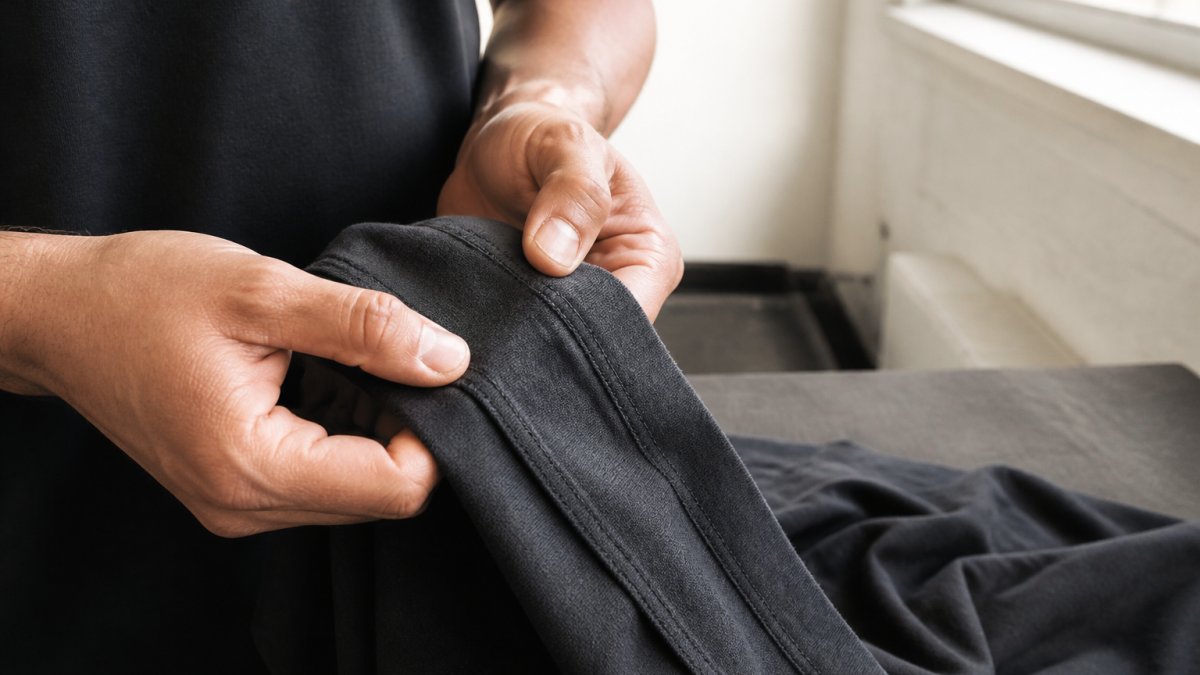
[Our Unity Heavy Faded Long Sleeve shows what that looks like in practice](https://94nqwa-dg.myshopify.com/products/heavy-faded-l-s-tee): a heavyweight garment-dyed cotton with dropped shoulders, wide neck ribbing with twin stitching, side seams, and double needle hems. The Quiet Unity Oversized Pump Tee takes a similar approach at 275 gsm, with a relaxed drop-shoulder silhouette and a mineral wash finish.


Care and long-term performance
How you wash a shirt matters as much as how it is made. Wash heavy cotton at 30°C on a gentle cycle, avoid bleach, tumble dry on low or hang dry, and iron at low temperature.
Odour retention is the other long-term issue. Synthetic fabrics trap oils that cause smell, so wash training shirts promptly and avoid leaving them damp in a bag. A vinegar rinse or a dedicated sport wash helps reset synthetic fabrics that have picked up a lingering smell.
Movement Tests and Care for Long-Term Performance
Run three tests before you commit to any gym shirt. Raise both arms fully overhead and check whether the hem lifts past your waistband.
If a shirt passes all three, it will handle most sessions. If it fails the overhead test, it will fail it every time you press.
Care is the other half of long-term performance. Wash heavy cotton at 30°C on a gentle cycle, avoid bleach, tumble dry on low or hang dry, and iron at low temperature.
For sizing guidance, use the garment's own flat-lay measurements against your body measurements rather than assuming your usual size carries over. That single habit prevents most fit returns.
Frequently Asked Questions
How should a gym shirt fit across broad shoulders?
A gym shirt for broad shoulders should sit on your shoulder points without pulling, allow a full arm raise without the hem lifting past your waistband, and have sleeves that end mid-bicep without cutting in. If the fabric bunches at the armpits or the chest pulls when you reach overhead, the shirt is too small. If the shoulder seam drops past your shoulder point, it is too large. Aim for a fit that moves with you, not against you.
Are oversized shirts good for the gym?
Oversized gym T-shirts for men can work well for training if the fabric is heavy enough to drape rather than cling. A boxy, dropped-shoulder cut in heavyweight cotton gives you room through the chest and shoulders without restricting movement. The trade-off is that very loose fabric can catch on equipment or bunch during floor work. For lifting, a relaxed silhouette in a substantial cloth is usually more comfortable than a tight performance tee.
Are raglan sleeves a good choice for broad shoulders?
Yes. Raglan sleeve workout shirts have seams that run from the collarbone to the underarm, which gives more room through the shoulder and chest than a standard set-in sleeve. That construction lets the fabric move with your arms instead of pulling across your back when you press or reach overhead. If you find standard tees tight across the upper back, a raglan cut is worth trying.
How do I stop a gym shirt from pulling across the chest?
Check your chest measurement against the shirt's size chart before ordering, and size to your chest rather than your usual letter size. If you are between sizes on a slim or classic fit, go up. If the shirt still pulls, look for a purpose-built athletic or broad fit with extra room through the chest and a tapered waist. Fabric with some stretch or a heavier knit that drapes can also reduce pulling during movement.
Getting the fit right comes down to one shift in thinking: stop solving a pattern problem with a size change. Quiet Unity builds gymwear for exactly this, with heavyweight cotton construction, dropped shoulder lines, and boxy cuts drafted to move with a muscular frame. Our pieces are made to order, shipped worldwide, and designed to work as hard in the gym as they do outside it. Shop Men and find the fit that stops getting in your way.