Guides · · 10 min read
How to Wash Heavy Cotton Apparel: A Practical Guide
Learn how to wash heavy cotton apparel without shrinkage or fading. Step-by-step care for tees, hoodies and heavyweight cotton that lasts.

Table of Contents
- Start With the Care Label, Then Sort Your Loads
- The Best Temperature to Wash Cotton Clothes
- How to Wash Heavy Cotton Apparel Without Shrinking It
- Choosing Detergent and Cycle Settings for Heavy Fabric
- How to Remove Sweat Odour From Cotton Clothes
- How to Dry Cotton Clothes So They Keep Their Shape
- Pre-Treating Stains and Caring for Prints and Finishes
- Frequently Asked Questions
Last Updated: October 19, 2026
Start With the Care Label, Then Sort Your Loads
Learning how to wash heavy cotton apparel starts with one habit: read the care label before anything touches water. At Quiet Unity, we build our heavyweight pieces from dense combed cotton, and that density changes how the fabric behaves in a machine.

Heavy cotton is a tightly woven, high-gram-weight fabric, usually 6.5 oz and up, that holds its shape because the fibres are packed closely together. That structure is why a heavyweight T-shirt drapes well and survives training.
Here is the order we recommend:
- Read the care label on every garment, every time.
- Sort into whites, darks, and colours.
- Turn each piece inside out.
- Check pockets and close zips.
- Weigh your load before it goes in.
Sorting matters more with heavy cotton than with thin fabric. A dense dark garment can bleed dye onto a pale one when both sit wet for a long cycle.
The Best Temperature to Wash Cotton Clothes
The best temperature to wash cotton clothes is cool water, around 30°C, for everyday cleaning. Cool water protects dye, limits shrinkage, and still lifts normal sweat and body oils from cotton fibres.
Cotton is durable, but heat is what ages it. Hot water speeds up dye loss and puts stress on the fibre structure. It also sets some stains rather than removing them.
Use this as your guide:
| Water Temperature | Best For | Risk |
|---|---|---|
| Cold, under 20°C | Delicates, prints, first washes | Less cleaning power on heavy soil |
| Cool, around 30°C | Everyday heavy cotton | Minimal |
| Warm, around 40°C | Heavily soiled workwear | Some colour fade over time |
| Hot, 60°C and above | Whites and towels only | Shrinkage, fading, print damage |
For most heavyweight T-shirts and hoodies, 30°C on a gentle cycle is the right call. Check the Australian Competition and Consumer Commission guidance on clothing care claims if a garment's label and its marketing claims ever seem to disagree.
How to Wash Heavy Cotton Apparel Without Shrinking It
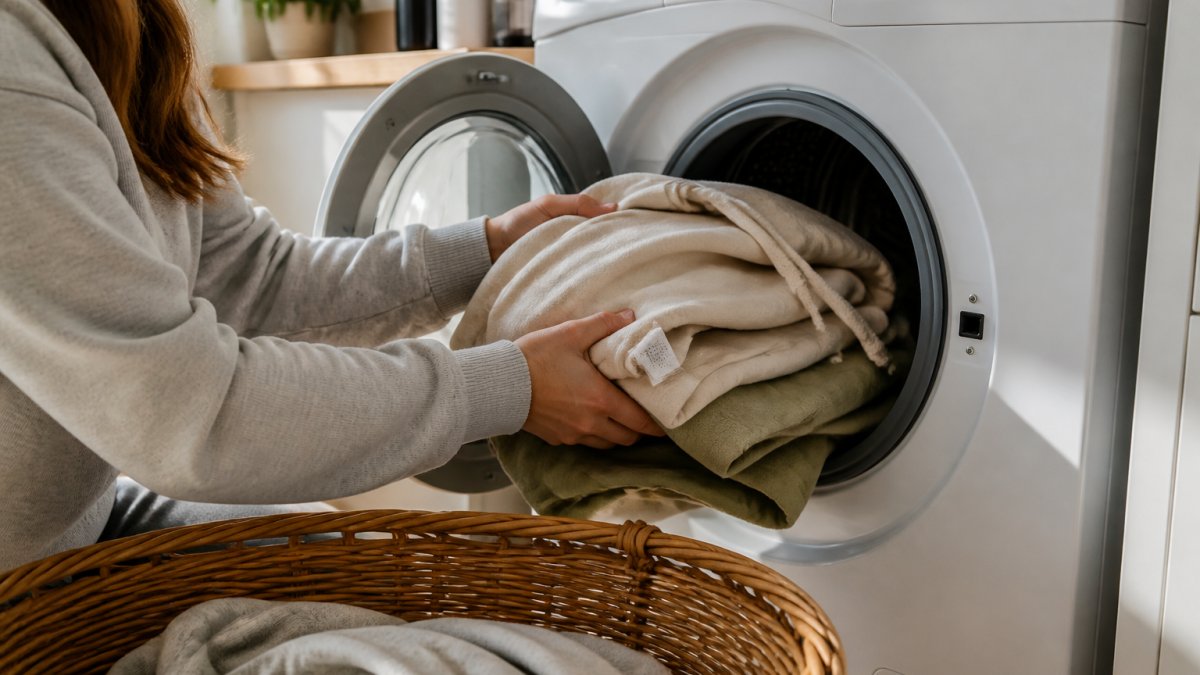
To wash heavy cotton without shrinking it, use cool water, a gentle cycle, and low agitation. Shrinkage comes from heat and mechanical stress, not from water alone. Control those two and your garments keep their size.
Why Heavy Cotton Shrinks Less Than You Expect
Dense, preshrunk cotton moves far less than people fear. Our heavyweight pieces use preshrunk fabric, which means the mill has already done most of the shrinking before the garment is cut. What is left is small.
The real damage comes from repeated hot washes and high-heat drying. Those two habits shrink cotton over months, not minutes.
Water Temperature and Agitation: The Two Levers
You have two controls. Temperature is one. Agitation is the other.
- Keep water at 30°C or cooler.
- Choose a gentle or delicate cycle.
- Use a low spin speed for dense knits.
- Skip the extra-long wash time unless the garment is genuinely dirty.
A common mistake is running heavy cotton on a heavy-duty cycle "because it's tough". The fabric is strong, but the seams and prints are not. Gentle agitation cleans just as well on a 15 to 30 minute cycle.
Choosing Detergent and Cycle Settings for Heavy Fabric
Pick a gentle, liquid laundry detergent and dose it by load size, water hardness, and soil level, not by habit. Heavy cotton holds residue, so more detergent does not mean cleaner clothes. It means stiffer ones, and stiff cloth is a sign that detergent is sitting in the weave rather than rinsing away.
How Much Detergent Is Actually Enough
Use the manufacturer's dose as a ceiling, not a target. For a standard drum holding two hoodies and three tees, start at roughly half the recommended dose for a normal load. Dense fabric needs water to move through it, and excess detergent foam blocks that movement.
Adjust from there:
- Soft water: use the lower end, around half dose. Soft water lathers more readily, so the same scoop goes further.
- Hard water: use closer to two-thirds dose, or choose a detergent formulated for hard water. Minerals in hard water bind to detergent and reduce its cleaning power, so under-dosing in hard water leaves soil behind.
- Heavily soiled workwear: dose at the full recommended amount for the load size, then run an extra rinse.
- Whites only: a detergent with an oxygen-based brightener is fine, but keep printed heavy cotton out of that load.
Signs you are using too much:
- Garments feel stiff after drying.
- White streaks appear on dark cotton.
- The drum smells musty between washes.
- The machine leaves visible suds on the door glass at the end of the cycle.
An extra rinse cycle fixes a residue problem quickly. Run one whenever you suspect oversudsing, and run one routinely if your water is hard or your drum is more than half full of heavy cotton.
Matching the Cycle and Spin Speed to Soil Level
Match the cycle to how dirty the garment actually is, not to how tough the cloth feels. Heavy cotton is strong, but seams, prints, and elastane in cuffs are not, so the most aggressive setting is rarely the right one.
- Light soil, everyday wear: gentle or delicate cycle, 30°C, low spin (around 400-600 rpm).
- Sweat-heavy training sessions: normal or cotton cycle, 30°C, medium spin (around 800 rpm), extra rinse.
- Visible grime or mud: pre-treat first, then a normal cycle at 30°C with a medium spin. Do not jump to hot water; heat can set the stain.
- Whites only: a warm wash at 40°C is acceptable for plain white heavy cotton, but keep heavy prints and dark trims out of it.
High spin speeds wring dense cotton hard and can pull seams out of shape and crease prints. Medium is plenty for most loads. If the garment has a printed panel, drop the spin one step further and accept a longer dry time.
How to Remove Sweat Odour From Cotton Clothes
To remove sweat odour from cotton clothes, tackle the bacteria, not the smell. Odour lives in the fibres, and heavy cotton traps it deeper than thin fabric. A standard wash often leaves it behind.
Start with these steps:
- Turn the garment inside out.
- Pre-treat the underarm and collar areas with a small amount of detergent.
- Soak for 15 to 30 minutes in cool water.
- Wash on a normal cycle at 30°C.
- Add an extra rinse.
- Air-dry in direct sunlight if possible.
Avoid fabric softener on training pieces. It coats the fibres and locks odour in. Sunlight is a free, effective deodoriser, and it suits heavy cotton well.
If odour persists after two washes, soak the garment in a diluted white vinegar solution before washing again. Rinse thoroughly afterwards.
How to Dry Cotton Clothes So They Keep Their Shape
How you dry cotton clothes decides whether they keep their shape. Air-drying flat or on a wide hanger is the safest option for heavy cotton. Tumble drying on low heat is acceptable, but high heat is not. The gap most guides leave is the practical part: thick fabric dries unevenly, and the outer surface can feel dry while the core, seams, and waistband stay damp.
Air-Drying Thick Garments Evenly
Thick fabric dries from the outside in. A heavyweight hoodie can feel dry on the chest panel while the hood lining, cuffs, and hem seams are still holding water. That trapped moisture is what produces musty smells and set-in odour.
- Reshape the garment while it is still damp: smooth the seams, ease the cuffs back into shape, and straighten the hem.
- Dry flat on a rack or over a wide bar, not on a thin wire. A thin wire leaves a crease line and stretches the wet cloth around it.
- Flip the garment once, halfway through drying, so the underside gets airflow too.
- Open hoods, unbutton plackets, and turn pockets out so air reaches the inner layers.
- Keep it out of direct high heat, which can bake in wrinkles and stress prints.
Hanging a wet heavyweight hoodie on a thin hanger stretches the shoulders. Lay it flat instead, or use a broad wooden hanger.
Tumble Drying on Low Heat Without Shrinking
If you tumble dry, use the lowest heat setting and treat it as a finishing step rather than the main drying method. Most practitioners find that 10 to 20 minutes on low, with the garment still slightly damp when it comes out, is enough to soften the cloth without driving shrinkage. Finish by air-drying flat.
- Use dryer balls to separate layers and improve airflow through thick fabric.
- Do not overload the dryer; thick items need room to tumble and for damp air to escape.
- Remove the garment while it is still faintly damp, reshape it, and lay it flat to finish.
- Never tumble dry a printed heavy cotton garment on high heat; the print can crack and the heat sets any remaining stain.
Pre-Treating Stains and Caring for Prints and Finishes
Pre-treat stains on thick fabric before washing, because dense cotton gives grime time to settle into the weave.
For most stains:
- Blot, do not rub, to lift excess.
- Apply a small amount of liquid detergent directly to the stain.
- Let it sit for 10 to 15 minutes.
- Wash as normal at 30°C.
- Check before drying. Heat sets stains permanently.
Prints and finishes need extra care. Our Unity Classic Oversized Tee and Quiet Unity Heavyweight Box Hoodie both carry care instructions worth following closely, including a 30°C gentle machine wash.

The Australian Government's guidance on textile care and labelling sets out what care information garments must carry, which is useful when a label is unclear.
Washing heavy cotton well comes down to restraint: cool water, gentle agitation, less detergent, and patience while drying. If you want apparel that stays out of your way in the gym and looks right afterwards, explore our Unity Classic Oversized Tee and Unity Stencil Hood.

Frequently Asked Questions
Can you machine-wash heavy cotton apparel?
Yes. Most heavy cotton garments, including 6.5 oz tees and 420 gsm hoodies, are machine washable. Use a gentle or normal cycle at 30°C or cooler, turn the garment inside out, and wash with similar colours. A Quiet Unity Heavyweight Box Hoodie, for example, lists machine wash at 30°C on a gentle cycle as its care instruction. Avoid hot water and high-heat drying, which cause the most damage to heavyweight cotton over time.
What temperature should you wash heavy cotton clothes at?
Wash heavy cotton at 30°C or cooler for everyday cleaning. Cool water protects dye and reduces shrinkage risk, while a 40°C cycle suits heavily soiled items like post-training gymwear. Hot water above 40°C speeds up fading and fibre stress, so reserve it only for whites that need sanitising. Always check the care label first, because finishes and prints may call for a lower limit.
How do you stop heavy cotton from shrinking?
Wash in cold or cool water, skip the tumble dryer or use low heat only, and avoid overloading the machine. Heavy cotton that is preshrunk, like the Quiet Unity Classic Oversized Tee, has low shrinkage performance by design. For non-preshrunk pieces, a first cold wash and air-dry sets the shape. Never wring thick fabric aggressively, because wet cotton fibres stretch and then contract unevenly as they dry.
How do you remove sweat and odour from heavy cotton clothing?
Pre-treat underarms and the back panel with a diluted white vinegar and water spray, let it sit for 15 minutes, then wash at 30°C with a gentle detergent. Skip fabric softener, which traps residue and bacteria in thick cotton. Air-dry fully in sunlight where possible, as UV helps kill odour-causing bacteria.